The Accidental Invention That Made Everyone Pop: How Two Engineers Created Bubble Wrap While Chasing the Wrong Dream
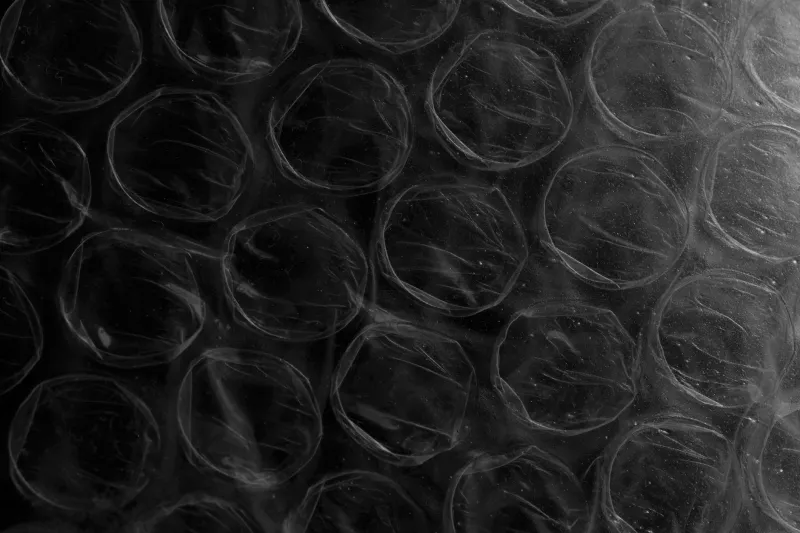
Sometimes the greatest discoveries happen when you're looking for something completely different. In 1957, two engineers in New Jersey were convinced they'd stumbled upon the next big thing in interior design. They had no idea they were actually creating one of the most beloved — and satisfying — materials in modern history.
The Wallpaper Dream That Wouldn't Stick
Alfred Fielding and Marc Chavannes weren't trying to revolutionize packaging when they sealed two plastic shower curtains together in a garage in Hawthorne, New Jersey. They were chasing what they believed would be the future of home décor: textured wallpaper with a three-dimensional look that would make any living room the envy of the neighborhood.
The concept seemed brilliant on paper. By trapping air between two layers of plastic, they'd created a material with an interesting bumpy texture that caught light in fascinating ways. They were certain homeowners would line up to cover their walls with this innovative material.
There was just one tiny problem: absolutely nobody wanted to put their creation on their walls.
The textured wallpaper was a spectacular failure. Homeowners took one look at the air-filled bumps and politely declined. The material was too thick, too weird-looking, and frankly, too impractical for residential use. But Fielding and Chavannes weren't ready to give up on their accidental invention.
Plan B: The Greenhouse Gambit
When the wallpaper market rejected their creation, the duo pivoted to what seemed like another logical application: greenhouse insulation. The trapped air bubbles would provide excellent thermal properties, they reasoned, helping to regulate temperature in commercial growing operations.
Once again, their timing was perfect — for failure. The greenhouse industry showed about as much enthusiasm for bubble-filled plastic sheets as interior designers had. The material was dismissed as too flimsy, too expensive, and ultimately too impractical for serious agricultural use.
By this point, most inventors would have thrown in the towel. Fielding and Chavannes had struck out twice with what seemed like reasonable applications for their product. But sometimes persistence pays off in the most unexpected ways.
IBM Changes Everything
The breakthrough came from an entirely unexpected source: the emerging computer industry. In the late 1950s, IBM was shipping their new 1401 computer systems — room-sized machines that cost a fortune and were extremely delicate. These early computers needed serious protection during transport, and traditional packing materials weren't cutting it.
Someone at IBM discovered that Fielding and Chavannes' failed wallpaper material was perfect for cushioning sensitive electronic equipment. The air-filled bubbles provided excellent shock absorption, the material was lightweight, and it could be easily wrapped around irregularly shaped components.
Suddenly, what had been a solution in search of a problem became the answer to a very specific and lucrative need.
The Birth of an Industry
Fielding and Chavannes founded Sealed Air Corporation in 1960, finally finding their market in protective packaging. What they'd originally called "Air Cap" became the product we know today as Bubble Wrap — though that name wouldn't be trademarked until 1967.
The timing couldn't have been better. The 1960s saw an explosion in consumer goods, mail-order shopping, and fragile electronics that all needed protection during shipping. Bubble Wrap became the go-to solution for everything from fine china to computer components.
The Unexpected Psychology of Pop
What Fielding and Chavannes never anticipated was how satisfying their invention would be to use. The simple act of popping those air-filled bubbles became an almost universal stress reliever. Psychologists have since studied the phenomenon, finding that the tactile sensation and sound of popping bubbles triggers a mild endorphin release.
This unexpected side effect turned Bubble Wrap into something more than just packing material — it became a cultural phenomenon. Office workers everywhere discovered the therapeutic value of a good bubble-popping session, and the material found its way into stress management discussions and even art installations.
From Failure to Fortune
Today, Sealed Air Corporation generates billions in annual revenue, much of it still from variations of that original accidental invention. Bubble Wrap has become so ubiquitous that most people can't imagine shipping fragile items without it.
The story of Bubble Wrap perfectly illustrates how innovation rarely follows a straight path. Fielding and Chavannes spent years trying to force their invention into markets that didn't want it, only to discover that the perfect application was something they'd never considered.
The Legacy of Accidental Genius
The next time you're popping bubble wrap while unpacking a delivery, remember that you're enjoying the byproduct of two failed business ventures. What started as an attempt to revolutionize wallpaper, then greenhouse insulation, ultimately became one of the most recognizable and beloved materials in the world.
Sometimes the best discoveries happen when you're looking for something else entirely. Fielding and Chavannes set out to change how we decorate our homes and ended up changing how we protect our most precious cargo — and giving us all a simple pleasure that never gets old.