When Feathers Defeated Firearms: Australia's Humiliating Military Loss to 20,000 Emus
The Enemy That Shouldn't Have Stood a Chance
In the annals of military history, Australia holds a distinction no nation wants: being the only country to officially lose a war to birds. Not metaphorically, not in some strategic sense, but literally—the Australian government deployed armed forces against emus in 1932 and suffered such a complete defeat that they were forced to withdraw in embarrassment.
The Great Emu War, as historians have dubbed it, began as a routine pest control operation and ended as one of the most humiliating military defeats of the 20th century. The fact that it involved 20,000 emus armed with nothing but beaks and attitude makes it even more extraordinary.
When Farming Meets Military Strategy
The trouble started in Western Australia's wheat belt, where World War I veterans had been granted farmland as part of a soldier settlement scheme. These men had survived the trenches of France, but they were unprepared for the enemy that emerged from the Australian outback in late 1932.
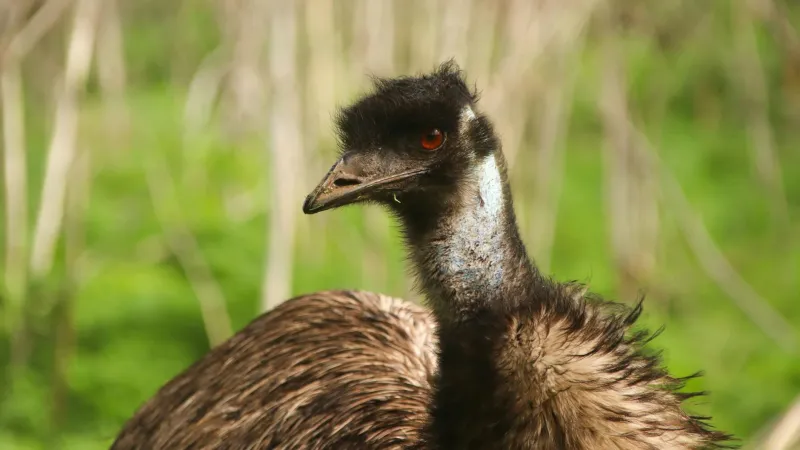
Emus, standing six feet tall and weighing up to 130 pounds, had discovered that the settlers' wheat fields made excellent dining. What began as isolated crop damage quickly escalated into a full-scale agricultural invasion. An estimated 20,000 emus descended on the farming region like a feathered plague, devouring entire harvests and trampling thousands of acres of crops.
The desperate farmers appealed to the government for military assistance, arguing that the emu invasion was a national emergency. Defense Minister Sir George Pearce, perhaps influenced by the military's confidence after recent successes in World War I, agreed to deploy actual soldiers with machine guns against the birds.
Major G.P.W. Meredith of the Royal Australian Artillery was placed in command of the operation, leading a force armed with two Lewis machine guns and 10,000 rounds of ammunition. The plan was simple: locate the emu flocks, set up the machine guns, and systematically eliminate the threat. Military strategists estimated the entire operation would take a few days at most.
The Battle Plans Meet Reality
What happened next reads like a military comedy of errors, except it was deadly serious for everyone involved. The first major engagement occurred on November 2, 1932, when Meredith's forces encountered a group of approximately 50 emus near Campion. The soldiers set up their machine guns and prepared for what they assumed would be a straightforward slaughter.
The emus had other plans.
As soon as the firing began, the birds scattered in all directions with a speed and unpredictability that confounded the military tacticians. Emus, it turns out, can run up to 30 miles per hour and change direction with the agility of trained dancers. The machine gunners, trained to target human-sized enemies moving in predictable patterns, found themselves completely outmaneuvered by opponents who seemed to understand military strategy better than they did.
Even more frustrating, the emus proved remarkably difficult to kill. Their thick feathers and tough skin absorbed much of the machine gun fire, and wounded birds often continued running as if nothing had happened. Soldiers reported hitting emus multiple times only to watch them bound away apparently unharmed.
Tactical Genius in Feathered Form
As the operation continued, it became clear that the emus possessed an almost supernatural understanding of military tactics. They began traveling in smaller groups, making mass attacks impossible. When machine guns were set up, the birds would scatter before the soldiers could achieve effective firing positions. Most remarkably, they seemed to learn from each encounter, developing increasingly sophisticated evasion strategies.
Major Meredith reported that the emus demonstrated "guerrilla tactics" and appeared to have developed a communication system that allowed them to warn other flocks of approaching soldiers. Local farmers claimed the birds had designated "sentries" who would alert the main groups to human presence.
The military's situation report from November 4th reads like something from a satirical war novel: "The number of birds killed cannot be accurately determined. The enemy has proven to be highly mobile and extremely difficult to engage effectively. Current ammunition expenditure is approximately 2,500 rounds with minimal confirmed casualties."
The Humiliating Withdrawal
After six days of combat operations, Major Meredith was forced to request additional ammunition and reinforcements. The request was denied. On November 8, 1932, the Australian military officially withdrew from the field, having achieved virtually nothing except providing the emus with target practice.
The final casualty count was devastating—for the military's reputation. Official reports claimed approximately 50 emu deaths, though independent observers suggested the number was closer to 12. The army had expended nearly 10,000 rounds of ammunition, meaning they had used roughly 200 bullets per confirmed kill.
Meanwhile, the emu population appeared largely unaffected. The birds continued their crop destruction with what farmers described as "increased boldness," apparently interpreting their victory over the military as proof of their invincibility.
The Aftermath of Avian Victory
News of the military defeat spread quickly, earning Australia international ridicule. British newspapers ran headlines like "Feathered Foes Too Much for Aussie Gunners" and "Emus 1, Australian Army 0." The story became a source of national embarrassment that persists to this day.
The government quietly shifted strategy, offering bounties for emu kills to civilian hunters instead of deploying military forces. This approach proved far more effective—individual hunters, unencumbered by military protocols and machine gun emplacements, managed to significantly reduce the emu population over the following months.
Lessons from the Feathered Front
The Great Emu War serves as a perfect example of how human overconfidence can lead to spectacular failure. The military approached the problem with conventional warfare thinking, assuming that superior firepower would automatically translate to victory. They failed to account for the enemy's natural advantages: speed, agility, and an intimate knowledge of the terrain.
Modern military historians study the Emu War as an early example of asymmetric warfare, where conventional forces prove ineffective against unconventional opponents. The emus' victory demonstrated that sometimes the most sophisticated military equipment is no match for simple evolutionary advantages and home field knowledge.
Today, the Great Emu War stands as Australia's most unique military defeat—and a reminder that in the battle between human ambition and natural adaptation, nature doesn't always lose. The emus, for their part, continue to roam Western Australia, presumably unaware that they're the only birds in history to defeat a modern military force in open combat.