Double Trouble: The Bridge Builders Who Made the Same Impossible Mistake Twice
The First Impossible Error
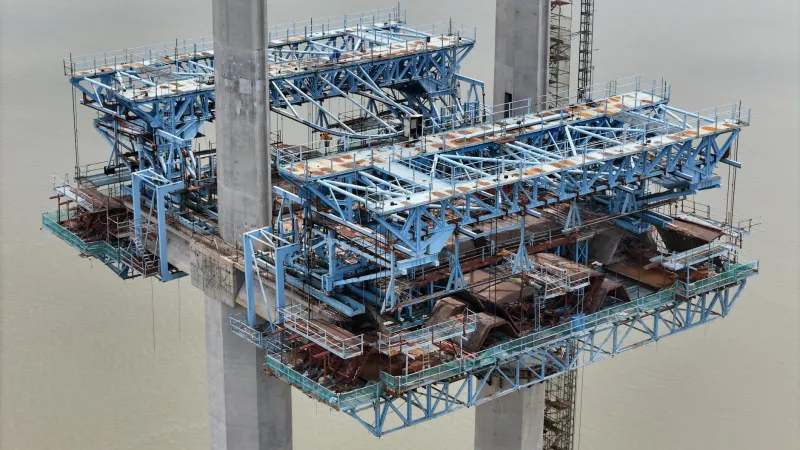
On a crisp October morning in 1962, construction supervisor Bill Hartman stood on the banks of the Wabash River in Indiana, staring at what should have been his career's crowning achievement. Instead, he was looking at 200 feet of steel and concrete bridge section that pointed resolutely in the wrong direction — a $2.3 million monument to engineering confusion that would have sent traffic flowing directly into a cornfield.
 Photo: Wabash River, via i.ytimg.com
The Millerville Bridge project was supposed to be routine: a standard highway overpass connecting two growing suburbs outside Fort Wayne. The design was straightforward, the timeline reasonable, and the contractor, Midwest Engineering Solutions, had an excellent reputation. Nothing about the project suggested it would become one of the most embarrassing engineering stories in American construction history.
 Photo: Fort Wayne, via i.pinimg.com
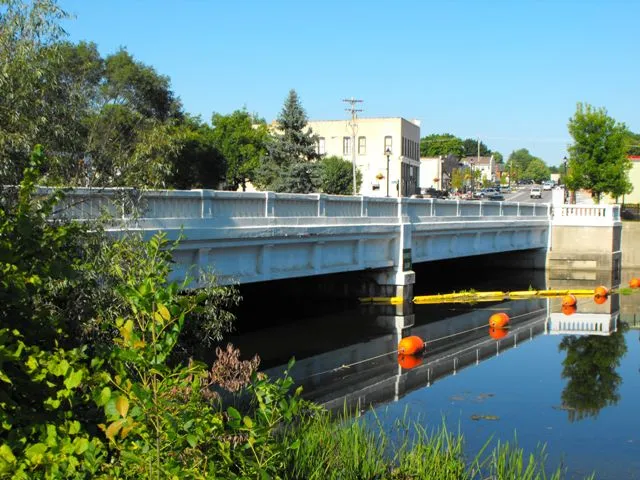 Photo: Millerville Bridge, via historicbridges.org
Anatomy of a Directional Disaster
The mistake wasn't subtle. The bridge section had been constructed to face northeast instead of southeast, a 90-degree error that would have been immediately obvious to anyone consulting the blueprints. Somehow, an entire construction crew had spent four months building a major infrastructure component in completely the wrong direction without a single person noticing the discrepancy.
Investigators later discovered a perfect storm of communication failures. The original site survey had been conducted using a temporary benchmark that was later moved without updating the construction documents. The project foreman had been working from preliminary sketches rather than final blueprints due to a paperwork delay. Most critically, the required weekly inspections by state engineers had been postponed repeatedly due to budget constraints.
The result was a bridge section that was structurally perfect but geographically useless — a masterpiece of craftsmanship pointing toward nowhere anyone wanted to go.
The Expensive Do-Over
Demolishing the misdirected bridge section took three weeks and cost an additional $800,000. The concrete had to be carefully removed to avoid damaging the foundation work, which was correctly positioned and could be salvaged. Steel components were cut apart and hauled away, their structural integrity compromised by the demolition process.
Indiana's Department of Transportation, embarrassed by the oversight and facing mounting pressure from local politicians, insisted on bringing in a completely new contractor for the rebuild. They hired Great Lakes Construction, a Chicago-based firm with an impeccable track record and specific experience with similar bridge projects.
The state also implemented additional oversight measures: daily inspections, mandatory blueprint reviews, and a requirement that all major construction decisions be approved by two separate engineers. The new protocols were designed to make another directional disaster literally impossible.
Lightning Strikes Twice
Six months later, Bill Hartman found himself standing in almost exactly the same spot, staring at almost exactly the same sight: another perfectly constructed bridge section pointing in completely the wrong direction.
Great Lakes Construction had somehow replicated Midwest Engineering's mistake with mathematical precision. Their bridge section faced northeast instead of southeast, a 90-degree error that placed it in the identical wrong orientation as its demolished predecessor. The chances of such an exact repetition seemed astronomically small, yet there it was: physical proof that the impossible could happen twice.
The second mistake was even more baffling than the first because it occurred despite all the additional safeguards. Daily inspections had been conducted and signed off on. Blueprint reviews had been completed and documented. Multiple engineers had approved each phase of construction. Yet somehow, an entirely different crew using different equipment and different management had arrived at precisely the same wrong answer.
The Investigation That Found Everything and Nothing
The state launched a comprehensive investigation into how two different contractors could make identical mistakes on the same project. What they discovered was a case study in how multiple small failures can compound into spectacular disasters.
Great Lakes Construction had been working from corrected blueprints that accurately showed the bridge's proper orientation. However, their surveying crew had unknowingly used the same incorrect benchmark that had misled the first contractor — a benchmark that state officials had forgotten to remove or mark as invalid.
The daily inspections had been conducted conscientiously, but the inspectors were checking construction quality rather than directional accuracy. They verified that concrete was properly mixed, steel was correctly welded, and safety protocols were followed, but no one thought to confirm that the bridge was facing the right direction.
Most remarkably, the multiple engineering approvals had been based on progress reports rather than site visits. Engineers were signing off on work that met specifications according to documentation, without physically verifying that those specifications were being implemented in the correct location.
The Cover-Up That Failed
State officials initially attempted to suppress news of the second mistake, hoping to avoid further embarrassment and potential lawsuits. Internal memos from the period, released decades later through freedom of information requests, revealed a plan to quietly demolish the second bridge section and rebuild it correctly without public announcement.
The cover-up lasted exactly three days. Local newspapers had been monitoring the bridge project closely after the first disaster, and reporters quickly noticed the demolition equipment returning to the site. When pressed for comment, a Department of Transportation spokesman initially claimed they were making "minor adjustments to the bridge alignment," but the truth emerged when construction workers began talking to local media.
The Financial Reckoning
The total cost of the Millerville Bridge project eventually reached $7.2 million — more than triple the original estimate. Two complete bridge sections had been built and demolished. Three different contractors had been hired (the third finally completed the bridge correctly). Legal fees from insurance claims and contractor disputes added another $1.3 million to the final bill.
The project became a cautionary tale in engineering schools and construction management programs. The American Society of Civil Engineers uses the Millerville Bridge case to illustrate how inadequate communication protocols can transform routine projects into expensive disasters.
Legacy of Double Failure
The Millerville Bridge was finally completed in 1964, two years behind schedule and facing the correct direction. It remains in service today, carrying thousands of vehicles daily between Fort Wayne's growing suburbs. A small plaque near the bridge's eastern approach commemorates the project, though it diplomatically omits any mention of the directional difficulties.
Great Lakes Construction and Midwest Engineering Solutions both survived the embarrassment and continued operating successfully for decades. However, both companies implemented comprehensive new quality control procedures that became industry standards for bridge construction projects.
The most lasting legacy of the double disaster was regulatory change. Indiana's Department of Transportation developed new inspection protocols that required physical verification of directional accuracy at multiple construction phases. These "Millerville Protocols" were eventually adopted by transportation departments in twelve other states.
Today, the story of the bridge that was built wrong twice serves as a reminder that even the most careful planning and oversight can fail in spectacular fashion. It demonstrates how institutional assumptions, communication gaps, and simple human error can combine to create disasters that seem too absurd to be real — but are documented in concrete and steel for anyone willing to look.