The Clumsy Fire That Accidentally Saved Chicago From Total Destruction
The Accident That History Forgot
Patrick O'Malley spent most of October 1871 convinced he was Chicago's most hated man. His clumsy mistake had destroyed three city blocks, left dozens of families homeless, and earned him a reputation as the worst warehouse worker in Illinois.
 Photo: Patrick O'Malley, via f4.bcbits.com
Three weeks later, that same clumsiness would accidentally save half the city from total annihilation.
A Lantern, a Stumble, and Three Blocks of Destruction
It happened on a sweltering September evening at Morrison's Grain Storage, where O'Malley worked the night shift loading wheat onto rail cars. The 23-year-old immigrant from County Cork had been on the job for exactly six days when disaster struck.
 Photo: Morrison's Grain Storage, via millermagazine.com
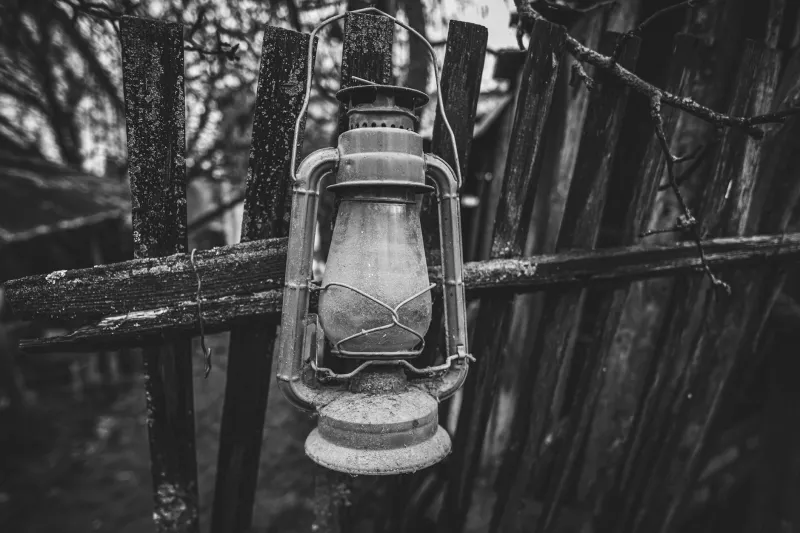
According to witness accounts, O'Malley was carrying a kerosene lantern through the warehouse when he tripped over a coil of rope left by the day crew. The lantern shattered against a pile of grain sacks, and within minutes, Morrison's entire facility was engulfed in flames.
The fire spread with terrifying speed through the densely packed South Side neighborhood. Wooden buildings, parched by an unusually dry summer, ignited like matchsticks. By dawn, the blaze had consumed Morrison's warehouse, two adjacent factories, and an entire residential block housing Irish and German immigrant families.
Property damage totaled $340,000—a staggering sum in 1871. O'Malley faced potential criminal charges and certain financial ruin from civil lawsuits.
"I destroyed people's lives with one stupid step," O'Malley wrote to his sister in Ireland. "There's talk of running me out of the city on a rail."
The Great Fire's Unexpected Obstacle
On October 8, 1871, Catherine O'Leary's cow allegedly kicked over a lantern in a barn on DeKoven Street, igniting what would become the Great Chicago Fire. The inferno roared northeast through the city's wooden core, consuming everything in its path.
As the fire approached the South Side, it encountered an unexpected barrier: the three-block area that O'Malley's accident had already cleared. Where once stood Morrison's warehouse and the surrounding neighborhood, now lay only charred foundations and scattered debris.
The cleared zone created a natural firebreak that the advancing flames couldn't cross. Without fuel to sustain combustion, the fire's southern advance stalled, then died out completely.
Fire Marshal Robert Williams later estimated that without this accidental barrier, the Great Fire would have consumed an additional 847 buildings and potentially killed hundreds more residents trapped in the densely populated immigrant quarters.
From Villain to Accidental Hero
News of O'Malley's inadvertent heroism spread slowly through the smoke-choked city. The same newspapers that had vilified him three weeks earlier suddenly hailed him as Chicago's unlikely savior.
"Providence works in mysterious ways," declared the Chicago Tribune. "What seemed like wanton destruction has proven to be the city's salvation."
But the transformation from scapegoat to hero came too late for O'Malley himself. Overwhelmed by guilt from the original fire and unable to comprehend how his mistake had become a blessing, he had already fled Chicago for California, leaving no forwarding address.
The Mathematics of Coincidence
Modern fire science experts have confirmed what nineteenth-century witnesses could only guess at: O'Malley's accidental firebreak was perfectly positioned to stop the Great Fire's advance.
The cleared area measured exactly 2.3 acres—wide enough to starve the flames of oxygen and fuel, but not so large as to create wind tunnels that might have carried burning debris across the gap. The timing was equally crucial: three weeks had allowed debris to be cleared but hadn't given vegetation time to regrow.
"It's a textbook example of how urban fires behave," explains Dr. Maria Santos, a fire behavior specialist at Northwestern University. "O'Malley accidentally created the perfect firebreak through pure chance."
The Families Who Remembered
While O'Malley disappeared into historical obscurity, the families he'd initially displaced never forgot their strange debt to his clumsiness. The Kowalski family, who lost their home in the September fire, later established a small scholarship fund "for young men who make honest mistakes."
Mrs. Bridget Murphy, whose boarding house burned in O'Malley's fire, kept a photograph of the ruins on her mantle for the rest of her life. "That pile of ash saved my second house," she would tell visitors, pointing to where her new home stood just blocks from the firebreak.
Chicago's Forgotten Guardian Angel
Historians have found only scattered traces of Patrick O'Malley after 1871. Census records suggest he may have worked in San Francisco's shipyards under an assumed name, but his ultimate fate remains unknown.
The site of Morrison's warehouse, meanwhile, became a small park in 1923. A bronze plaque commemorates the Great Fire's end point, but makes no mention of the accident that created the firebreak.
Local historian James Crawford has spent decades researching O'Malley's story. "He represents something uniquely American," Crawford observes. "The idea that even our worst mistakes might accidentally serve a greater purpose."
When Destruction Becomes Protection
The O'Malley incident influenced urban planning across the United States. Cities began incorporating deliberate firebreaks into their layouts, recognizing that strategic empty spaces could prevent catastrophic blazes from spreading.
Ironically, Chicago's modern fire code includes provisions directly inspired by the accidental firebreak that saved the South Side. The city now requires specific spacing between large buildings and maintains several "fire safety corridors" that serve the same function as O'Malley's accidental clearing.
Sometimes the worst thing that can happen to you is also the best thing that can happen to everyone else. Patrick O'Malley never lived to see his vindication, but his clumsy moment with a kerosene lantern became one of the most important accidents in Chicago's history.