The Invisible Killer That Lived in Plain Sight: How Fredonia's Water Tower Became a Twenty-Year Death Trap
The Town That Slowly Forgot How to Feel Healthy
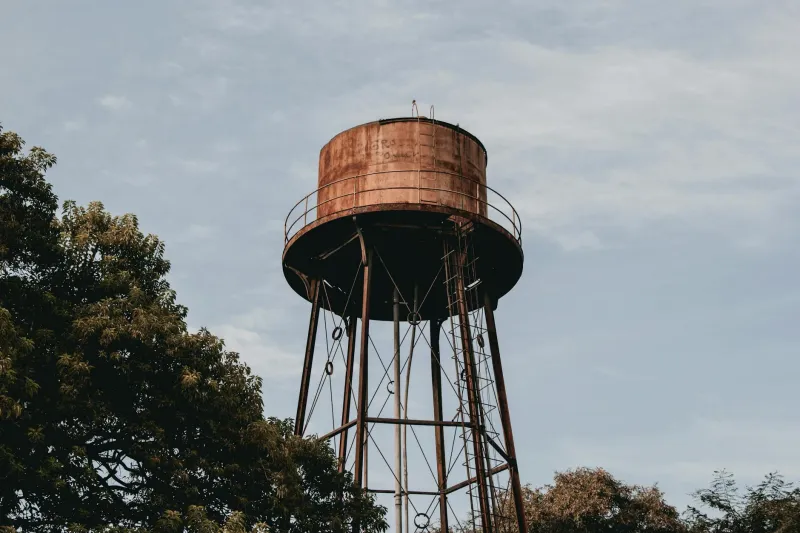
In 1967, the residents of Fredonia, Kansas celebrated the completion of their gleaming new water tower. Standing proud against the prairie sky, the 100,000-gallon structure promised clean, reliable water for generations. What they got instead was a slow-motion disaster that would poison an entire community for twenty years.
By the mid-1970s, something wasn't right in Fredonia. Residents complained of persistent fatigue that doctors couldn't explain. Children seemed sluggish at school. Adults found themselves forgetting simple things, struggling with concentration that had never been a problem before. The local physician, Dr. Margaret Chen, noticed an unusual pattern in her practice — nearly every patient who came through her doors described the same vague but persistent symptoms.
When Normal Becomes Toxic
The water tower that had been Fredonia's pride became its silent executioner. During construction, contractors had used lead-based paint on the interior walls — a common practice in the 1960s that was considered perfectly safe. The paint contained enough lead to poison a small army, but it was sealed inside a steel tank that should have kept it away from the water supply.
Should have.
What nobody anticipated was the gradual corrosion that would occur over two decades. As the steel aged and developed microscopic pinholes, the lead paint began to leach directly into the drinking water. Every glass of water, every cup of coffee, every meal cooked with tap water was delivering a steady dose of neurotoxin to every person in town.
The Mystery That Doctors Couldn't Solve
Dr. Chen spent years trying to understand why her patients were getting sicker. Blood tests came back normal for everything she could think to check. The symptoms — fatigue, memory problems, irritability, difficulty concentrating — could have been caused by dozens of different conditions. Lead poisoning never occurred to her because it was 1980, and lead paint had been banned in homes for years.
Meanwhile, the town's children were paying the highest price. Test scores at Fredonia Elementary began dropping in the late 1970s. Teachers noticed that kids who had been bright and engaged were becoming distracted and difficult to teach. Parents blamed television, sugar, or changing times. Nobody suspected that their children's developing brains were being systematically damaged by the water they drank at every meal.
The Outsider Who Noticed What Nobody Else Could See
The truth might have stayed buried forever if not for Dr. James Patterson, an environmental health specialist from the Kansas Department of Health who arrived in Fredonia in 1987 to investigate reports of unusual illness patterns. Patterson had spent his career studying industrial contamination, and something about Fredonia's symptoms triggered his instincts.
Unlike the local doctors who had been treating individual patients, Patterson looked at the community as a whole. He mapped out the symptoms geographically and noticed they were concentrated in areas served by the municipal water system. Rural residents on well water seemed largely unaffected.
The Discovery That Changed Everything
When Patterson finally tested Fredonia's water supply, the results were staggering. Lead levels were more than ten times the federal safety limit. The water tower that had served the community for twenty years had been functioning as a giant lead extraction device, slowly poisoning everyone who depended on it.
The revelation sent shockwaves through the town. Residents who had blamed their health problems on aging, stress, or bad luck suddenly understood they had been living inside a toxic environment. Children who had struggled in school weren't lazy or learning disabled — they were victims of lead poisoning.
The Aftermath of Accidental Poisoning
The cleanup was immediate and expensive. The water tower was drained, sandblasted clean, and relined with food-grade materials. The entire municipal water system was flushed and tested repeatedly. But the damage to human health couldn't be undone so easily.
Many of Fredonia's children faced lifelong learning disabilities from lead exposure during critical developmental years. Adults dealt with permanent cognitive effects that would follow them for the rest of their lives. The town filed lawsuits against the construction company and paint manufacturer, but legal victories couldn't restore what had been lost.
The Hidden Lesson in Plain Water
Fredonia's story reveals how the most dangerous threats often hide in the most ordinary places. For twenty years, residents celebrated their modern water system while it slowly poisoned them. The infrastructure meant to protect public health became its greatest threat.
Today, Fredonia's water is clean and safe. The town has rebuilt, and new families have moved in. But the old water tower still stands as a reminder that sometimes the most devastating disasters happen not in dramatic moments of crisis, but in the quiet accumulation of ordinary days when everything seems perfectly normal.