When One French Garden Unleashed Europe's Greatest Wildlife Apocalypse
The Garden Problem That Changed a Continent
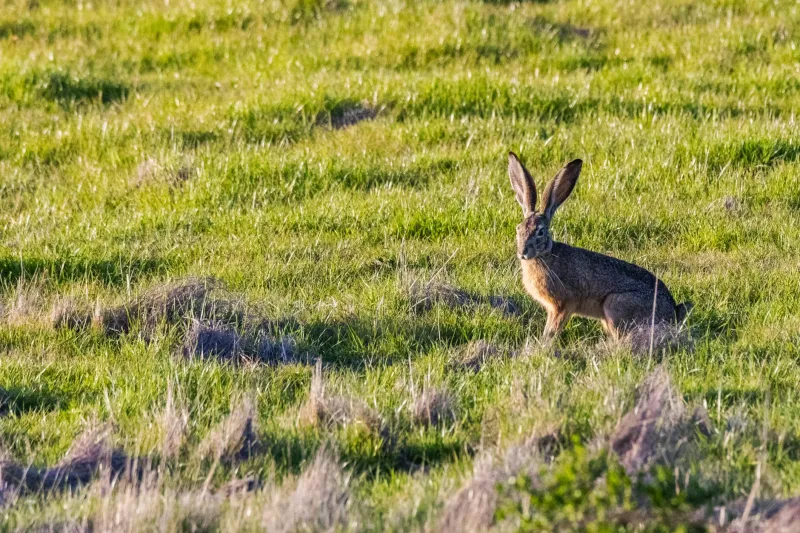
Dr. Paul-Félix Armand-Delille had a simple problem in 1952: rabbits were destroying his prized vegetable garden at his estate in Maillebois, France. Like any frustrated gardener, he wanted them gone. Unlike most gardeners, however, Dr. Armand-Delille was a physician with access to a South American virus called myxomatosis — a pathogen that was lethal to European rabbits but supposedly harmless to other animals.
What happened next sounds like the plot of a disaster movie, except it's entirely real. Within two years, this single act of suburban pest control had unleashed a biological catastrophe that swept across Europe like wildfire, fundamentally altering ecosystems from Britain to Spain and triggering consequences that scientists are still unraveling seven decades later.
The Viral Wildfire No One Saw Coming
Armand-Delille's plan seemed foolproof. He would infect a few rabbits on his property with myxomatosis, let nature take its course, and enjoy his vegetables in peace. The virus, he knew, spread through rabbit fleas and mosquitoes — but surely it would stay contained to his local area.
He couldn't have been more wrong.
Myxomatosis spread through rabbit populations with a speed and efficiency that stunned researchers. The virus didn't respect property lines, national borders, or geographic barriers. Within months, infected rabbits were dying across France. Within a year, the plague had crossed the English Channel. By 1954, it was decimating rabbit populations from Scotland to southern Spain.
The numbers are almost incomprehensible: in some regions of Britain, 99% of wild rabbits died within two years. Entire landscapes that had been grazed short by millions of rabbits suddenly exploded with vegetation that hadn't grown freely in centuries.
When Ecosystems Flip Overnight
What makes this story truly unbelievable isn't just the scale of the rabbit die-off — it's how quickly entire ecosystems transformed in response. In Britain alone, an estimated 600 million rabbits died, and the ecological ripple effects were immediate and dramatic.
Grasslands that had been cropped short by constant rabbit grazing suddenly became scrublands and then forests. Plant species that had survived for centuries only in rabbit-proof locations began spreading rapidly across the countryside. Some areas experienced their first tree growth in over 500 years.
But the changes went far beyond vegetation. Predators that had depended on rabbits — foxes, stoats, weasels, and birds of prey — faced starvation. Some species populations crashed so severely they never fully recovered. The rabbit-dependent ecosystem had been so thoroughly established that its sudden collapse left entire food webs scrambling to adapt.
The Unintended Conservation Miracle
Here's where the story takes its most remarkable turn: while Dr. Armand-Delille's viral outbreak was an ecological disaster, it accidentally became one of the greatest conservation successes in British history.
For centuries, Britain's coastal areas had been under siege from rabbit-induced erosion. Millions of rabbits had grazed coastal grasslands down to bare soil, leaving clifftops vulnerable to wind and rain erosion that threatened to wash entire communities into the sea. The rabbit plague suddenly eliminated this pressure, allowing coastal vegetation to recover and stabilize the shoreline.
Scientists now estimate that the myxomatosis outbreak prevented coastal erosion that could have cost billions in property damage and potentially displaced thousands of residents from vulnerable coastal communities. One man's garden pest problem had accidentally saved Britain's coastline.
The Legal Reckoning
When authorities finally traced the outbreak back to Dr. Armand-Delille's estate, they faced an unprecedented legal question: how do you prosecute someone for accidentally reshaping an entire continent's ecology?
The French government initially considered charging him with releasing a biological agent, but the case was complicated by the fact that his actions had been technically legal when he performed them. There were no laws specifically prohibiting the release of rabbit viruses, partly because no one had imagined the scale of what was possible.
Ultimately, Armand-Delille received only a token fine — roughly equivalent to $50 in today's money. French authorities seemed unsure whether to treat him as a criminal or an inadvertent conservationist.
The Legacy of One Man's Impatience
Today, European rabbit populations have partially recovered, though they remain far below pre-1952 levels. The virus still circulates in wild populations, creating a natural population control that continues to shape European ecosystems.
Dr. Armand-Delille died in 1963, eleven years after his fateful decision to solve his garden problem. He never fully grasped the continental scope of what he had unleashed, though he did live to see the early ecological transformations his impatience had triggered.
The story of Europe's rabbit apocalypse remains one of the most striking examples of how small, seemingly local actions can cascade into global consequences. It's a reminder that in our interconnected world, there's really no such thing as a "small" ecological intervention — and sometimes the most dramatic changes in history begin with nothing more than a frustrated gardener and a handful of infected rabbits.