The Storage Unit That Rewrote History: How 40 Years of 'Lost' Government Files Turned a County Upside Down
The $200 Gamble That Changed Everything
Gary Mitchell had bought plenty of abandoned storage units over the years. The retired electrician from Zanesville, Ohio made a modest living reselling the forgotten contents of unpaid units. When Storage World held their monthly auction in March 2019, he bid $200 on Unit 47 — sight unseen, as always.
What he found inside would trigger the biggest legal earthquake in Muskingum County history.
The Discovery That Shouldn't Have Existed
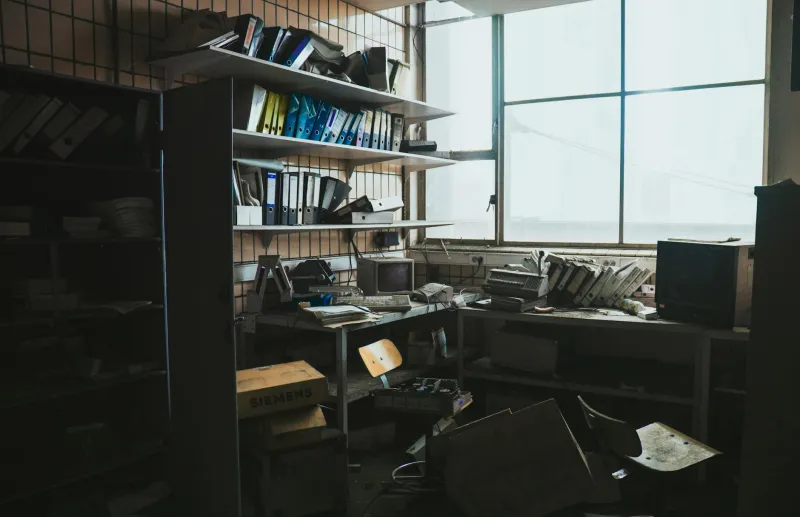
Instead of the usual collection of furniture and family photos, Unit 47 contained something extraordinary: 847 boxes of government documents, photographs, and official records dating back to 1962. Property deeds, court transcripts, surveyor maps, tax assessments, and correspondence between county officials — all supposedly destroyed in the courthouse fire of 1978.
Mitchell spent weeks sorting through the papers, slowly realizing he had stumbled onto something significant. These weren't copies or duplicates. These were original documents with official seals, signatures, and notarizations that had been missing from public records for four decades.
The Fire That Wasn't Complete
The Muskingum County Courthouse fire of November 15, 1978 had been devastating. Official reports stated that virtually all records from the county's founding in 1804 through 1978 were destroyed. Insurance claims totaled $2.3 million. The community mourned the loss of their historical heritage, and county officials began the laborious process of reconstructing records from surviving copies and witness testimony.
But someone had saved the originals.
Archival records showed that in the weeks before the fire, County Clerk Dorothy Washburn had moved "selected historical documents" to "secure off-site storage" as part of a preservation project. After the fire, Washburn reported that the storage location had also been damaged and the documents lost. She died in 1983, taking the truth with her.
The Legal Bombshell
When Mitchell contacted the county about his discovery, he triggered a legal avalanche. The recovered documents revealed that dozens of property disputes settled after the 1978 fire had been decided incorrectly. Land deeds thought lost forever suddenly reappeared, showing different ownership histories than what had been reconstructed from memory and partial records.
The Hendricks family farm, sold to developers in 1985 based on reconstructed property records, actually belonged to a different branch of the family according to the original 1923 deed. The Riverside Shopping Center, built on land purchased from the county in 1992, sat on property that had never been legally transferred from its original owners.
The Mystery of the Missing Bureaucrat
Investigators pieced together Dorothy Washburn's actions in the months before and after the fire. She had rented Unit 47 under her maiden name six weeks before the courthouse burned. After the fire, she continued paying rent on the unit for five years before abandoning it entirely.
Washburn's family insisted she had acted to preserve historical records, not hide them. But questions remained about why she never revealed the documents' location, even as the county struggled to reconstruct its legal foundation. Some speculated she planned to "discover" them later but died before she could execute her plan.
The Bureaucratic Nightmare
The recovered documents created an unprecedented legal crisis. How do you reconcile 40 years of decisions based on incomplete information with the sudden reappearance of complete records? Property that had changed hands multiple times based on reconstructed deeds now faced challenges from the original documentation.
Muskingum County found itself simultaneously celebrating the recovery of its historical heritage and dreading the legal implications. Every real estate transaction, court decision, and government action between 1978 and 2019 potentially needed review.
The Human Cost of Hidden Truth
Families who had spent decades believing their property ownership was secure suddenly faced challenges to their titles. The Riverside Shopping Center owners discovered their $12 million development might be built on land they didn't legally own. Dozens of residents found themselves caught between conflicting versions of legal reality.
Meanwhile, other families celebrated vindication. The Hendricks heirs, who had fought unsuccessfully for years to reclaim their family farm, suddenly had documentary proof of their claims. Property disputes that had seemed permanently settled were reopened with new evidence.
The Ongoing Legal Battle
Four years later, courts are still sorting through the implications of Mitchell's discovery. A special master appointed by the Ohio Supreme Court has been tasked with determining which version of reality should take precedence — the carefully reconstructed records from after 1978 or the original documents that were hidden for 40 years.
The case has created new legal precedents about the statute of limitations on property disputes and the authority of government records. Can documents hidden by a government employee retain their legal force decades later? Do good-faith transactions based on incomplete information deserve protection from subsequently discovered evidence?
The Lesson in a Storage Unit
Gary Mitchell still owns Unit 47, now empty except for a few boxes he kept as souvenirs. His $200 investment unleashed legal battles worth millions of dollars and exposed how fragile our systems of official truth really are.
The storage unit scandal revealed that history doesn't always stay buried, even when powerful people want it to. Sometimes the most important discoveries happen not in grand moments of revelation but in the mundane process of cleaning out forgotten spaces.
Muskingum County's experience serves as a reminder that the official version of events isn't always the complete version, and that the past has a stubborn way of refusing to stay in the past — especially when it's been hiding in a storage unit all along.