The Chemical Cocktail That Accidentally Cured a Town's Blues: Missouri's Unintentional Antidepressant Water Supply
When Happy Water Wasn't Just a Marketing Slogan
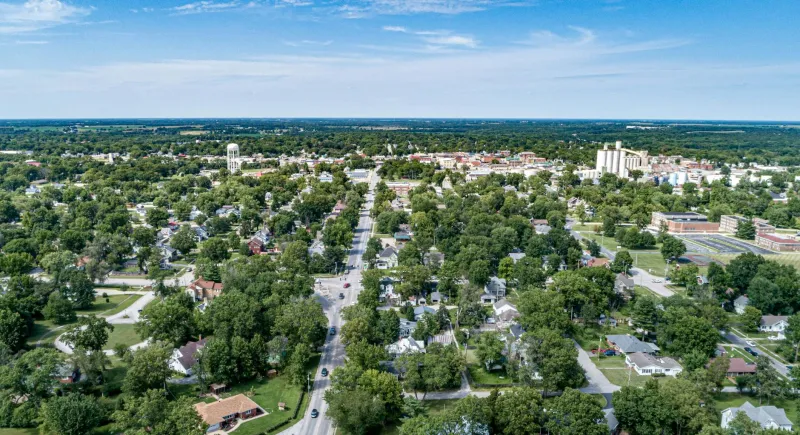
In the rolling hills of southeastern Missouri, something peculiar was happening in the small mining community of Fredericktown. Residents seemed remarkably upbeat for people living in a hardscrabble industrial town. Neighbors were friendlier, domestic disputes were rare, and the local suicide rate was mysteriously low compared to similar communities across the region.
For nearly half a century, nobody questioned why Fredericktown felt different. The answer was flowing right out of their kitchen taps.
The Discovery That Changed Everything
In 1990, Dr. Gerhard Schrauzer, a biochemist at the University of California San Diego, was conducting research on trace minerals in drinking water when he stumbled across something extraordinary. Water samples from Fredericktown contained naturally occurring lithium levels nearly 100 times higher than the national average.
Lithium, the same element prescribed as a mood stabilizer for bipolar disorder, had been quietly medicating an entire town for generations.
"We couldn't believe what we were seeing," Schrauzer later recalled. "Here was a natural experiment that had been running for decades, and nobody had noticed."
The Geology Behind the Mood Boost
Fredericktown sits atop mineral-rich deposits left behind by ancient geological activity. As groundwater percolated through lithium-bearing rocks, it picked up trace amounts of the element before flowing into the town's water supply. The concentration wasn't high enough to cause toxicity, but it was sufficient to produce measurable psychological effects.
Residents were consuming roughly 0.17 milligrams of lithium per liter of water — far below therapeutic doses used in psychiatry, but enough to influence brain chemistry over time.
The Numbers Don't Lie
When researchers compared Fredericktown's statistics to neighboring communities, the differences were stark:
- Suicide rates were 40% lower than the state average
- Domestic violence incidents occurred at half the expected frequency
- Hospital admissions for mood disorders were significantly reduced
- Even crime rates showed a noticeable decline
"It was like the entire town was on a very mild, very long-term antidepressant," explained Dr. Anna Fels, a psychiatrist who studied the phenomenon. "The effect was subtle but consistent across multiple generations."
The Ethical Dilemma Nobody Saw Coming
The discovery raised uncomfortable questions about informed consent and mass medication. Thousands of people had been consuming a psychoactive substance without their knowledge or permission. While the effects appeared beneficial, the ethical implications were staggering.
Should authorities have disclosed the findings immediately? Was it moral to allow the situation to continue? What about people who moved to town specifically seeking the "Fredericktown effect" after news broke?
When the Secret Got Out
By the mid-1990s, word of Fredericktown's lithium water had spread beyond academic circles. The town found itself at the center of an unusual tourism boom, with visitors arriving hoping to sample the mood-enhancing water supply.
Local businesses capitalized on the attention, with restaurants advertising "happy hour" specials featuring tap water and gift shops selling bottled local water as novelty items.
"People would drive from Kansas City just to fill up jugs," remembered longtime resident Martha Henderson. "It was the strangest thing — tourists coming to drink our water."
The Science Behind Serendipitous Sobriety
Researchers discovered that low-dose lithium consumption might explain similar phenomena in other communities worldwide. Studies in Japan, Chile, and parts of Texas revealed correlations between naturally occurring lithium in water supplies and reduced rates of suicide and violent crime.
The Fredericktown case became a cornerstone study in environmental psychiatry, demonstrating how geography could literally shape a community's mental health.
Modern Implications and Ongoing Mysteries
Today, Fredericktown's lithium levels have decreased due to changes in water treatment and source management. Longtime residents report noticing the difference, though whether that's psychological or physiological remains unclear.
The case continues to influence discussions about water fluoridation, environmental health policy, and the ethics of population-wide interventions. Some researchers advocate for controlled lithium supplementation in water supplies, while others warn about the precedent of medicating entire populations without explicit consent.
The Town That Chemistry Built
Fredericktown's story reveals how the line between natural and artificial, beneficial and intrusive, can blur in unexpected ways. For decades, residents enjoyed better mental health not through therapy, medication, or lifestyle choices, but through simple geography and chemistry.
It's a reminder that sometimes the most profound changes happen so gradually, so naturally, that we don't notice them until scientists start asking why everyone seems so unusually content with their lives.