The Great 'The' Heist: How Ohio State Tried to Own the English Language

When Branding Goes Too Far
In August 2019, Ohio State University filed what might be the most audacious trademark application in legal history: they wanted to own the word "The." Not "The Ohio State University" or "The Buckeyes" — just "The," the most common word in the English language, used approximately 4% of all written text.
 Photo: Ohio State University, via logodix.com
The application wasn't a publicity stunt or legal experiment. Ohio State was deadly serious about controlling commercial use of the definite article, particularly on clothing and merchandise. Their legal team had identified what they saw as a valuable branding opportunity hiding in plain sight.
The Economics of a Single Word
Ohio State's interest in "The" stemmed from a peculiar quirk of their institutional identity. Unlike most universities, Ohio State insisted on being called "THE Ohio State University," emphasizing the definite article with religious fervor. Students, alumni, and faculty had turned this grammatical insistence into a cultural phenomenon, dramatically stressing "THE" when introducing themselves or their affiliation.
This linguistic tic had commercial potential. Ohio State merchandise featuring oversized "THE" logos was already generating millions in revenue. University officials realized that if they could trademark the word, they could potentially control — and profit from — any commercial use of "THE" on apparel, particularly in contexts that might confuse consumers about official university merchandise.
The financial stakes were enormous. College merchandise is a $4.6 billion industry, and Ohio State ranks among the top revenue generators. Controlling "THE" could theoretically give them legal grounds to challenge countless competitors and expand their licensing empire beyond anything previously imaginable.
The Opposition Army
The trademark application triggered an immediate legal uprising. Within weeks, the U.S. Patent and Trademark Office received over 300 opposition filings from businesses, individuals, and organizations horrified by the prospect of a university owning basic English vocabulary.
 Photo: U.S. Patent and Trademark Office, via cdn.freebiesupply.com
The most serious challenge came from Marc Ecko Enterprises, a fashion company that had been using "THE" prominently in their branding for years. Ecko's legal team argued that Ohio State's application represented "an unprecedented assault on the English language" and could set a dangerous precedent for privatizing common words.
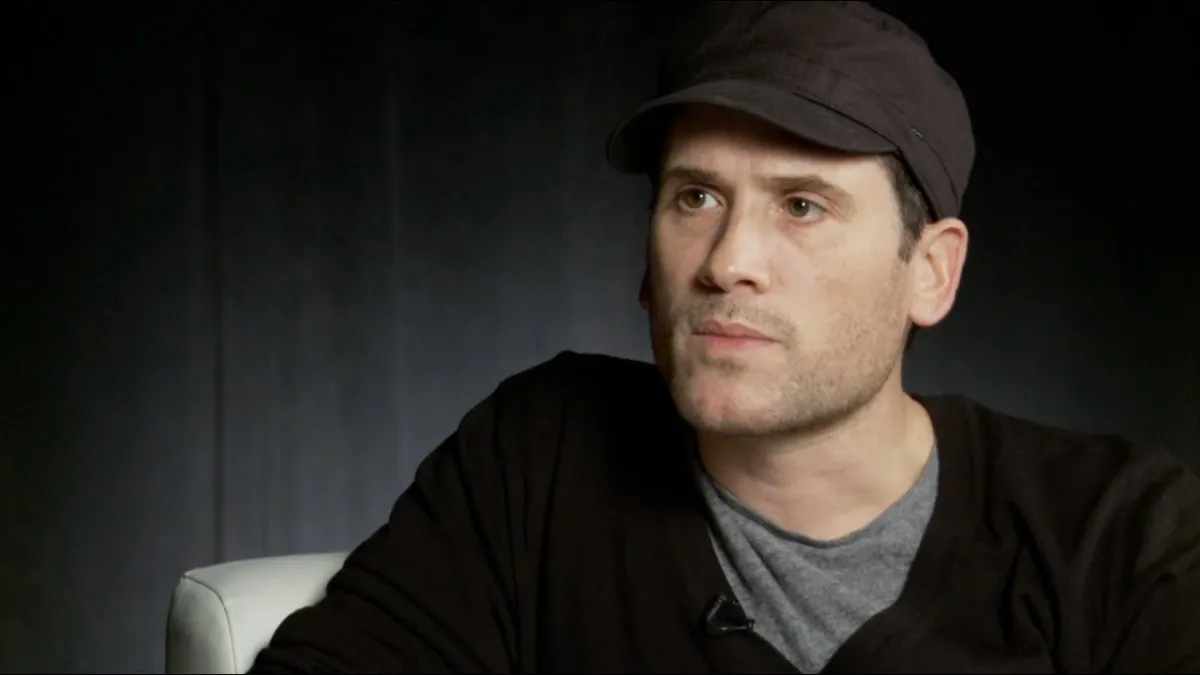 Photo: Marc Ecko Enterprises, via i.ytimg.com
Other opponents ranged from small t-shirt companies to major corporations, all united by the absurd prospect of paying licensing fees to use a word that predated Ohio State University by roughly 800 years. Legal scholars filed academic briefs arguing that granting the trademark would fundamentally undermine the purpose of intellectual property law.
The Legal Labyrinth
What followed was a masterclass in how trademark law can spiral into expensive absurdity. Ohio State's legal team, led by some of the country's most expensive intellectual property attorneys, had to argue that "THE" could function as a distinctive brand identifier rather than merely descriptive text.
This required proving that consumers would see "THE" on a t-shirt and immediately think of Ohio State University rather than, say, reading it as part of a sentence. The university commissioned consumer surveys, hired linguistic experts, and compiled thousands of pages of documentation attempting to demonstrate that they had somehow transformed the most basic word in English into their exclusive intellectual property.
The opposition's strategy was equally elaborate. Marc Ecko's team hired their own linguists to testify about the historical usage of "THE," conducted competing consumer studies, and assembled evidence showing that countless businesses had been using the word commercially long before Ohio State's application.
The Hidden Costs
By 2021, legal fees on both sides had exceeded $400,000, with no resolution in sight. Ohio State was paying premium rates for trademark specialists to craft increasingly creative arguments about why a 13th-century English word should belong to a 19th-century American university.
The bureaucratic machinery of trademark opposition had created its own momentum. Each filing triggered counter-filings, expert depositions led to competing expert depositions, and procedural motions spawned additional procedural motions. The case had become a legal Ouroboros, consuming resources to sustain its own existence.
Internal university documents, later leaked to student newspapers, revealed growing concern among administrators about the mounting costs and negative publicity. What had begun as a clever branding strategy was becoming an expensive public relations disaster.
The Quiet Retreat
In June 2022, Ohio State quietly abandoned their trademark application. The university issued a brief statement claiming they had "achieved their objectives" and "successfully protected their brand interests," but legal experts interpreted the withdrawal as an expensive surrender.
The total cost of Ohio State's failed attempt to own "THE" was never officially disclosed, but trademark attorneys familiar with the case estimated the university spent between $500,000 and $750,000 in legal fees, expert witnesses, and administrative costs — all to secure precisely nothing.
Marc Ecko Enterprises, meanwhile, had spent approximately $300,000 defending the English language from corporate appropriation, costs they absorbed as "a necessary investment in linguistic freedom."
Lessons from Linguistic Overreach
The Ohio State "THE" case has become required reading in intellectual property law courses as an example of how trademark strategies can escape rational boundaries. Legal scholars use it to illustrate the difference between protecting legitimate brand interests and attempting to colonize basic human communication.
The case also highlighted how modern branding culture can push institutions toward increasingly absurd claims of ownership over common cultural elements. Ohio State's attempt to trademark "THE" reflected a broader trend of organizations trying to control not just their specific names and logos, but the very language surrounding their identity.
Today, Ohio State continues to emphasize "THE" in their branding, but they do so without legal monopoly over the word. Their merchandise still features oversized definite articles, their students still dramatically stress "THE" when introducing themselves, and the university still generates millions from their linguistic quirk — they just can't prevent anyone else from using the most common word in English.
The great "THE" heist ultimately failed, but it succeeded in demonstrating just how far institutional pride and legal creativity can push the boundaries of common sense.