The Virus That Eats Bacteria Was Curing People 80 Years Before We Remembered It Existed
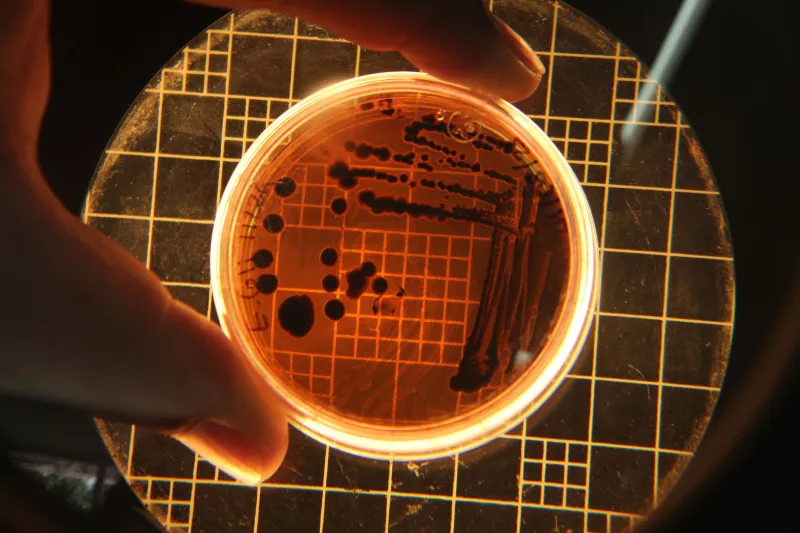
Somewhere in a research archive in Tbilisi, Georgia — the country, not the state — there are treatment records from the 1940s, 1950s, and 1960s describing patients cured of infections that should have killed them. The treatments used weren't antibiotics. They were viruses. Specifically, viruses engineered to hunt and destroy bacteria.
This isn't science fiction. It isn't alternative medicine. It's one of the strangest chapters in the history of Western medicine — a story about a genuinely effective therapy that got sidelined not because it didn't work, but because something easier came along at exactly the wrong moment.
The Discovery That Almost Changed Everything First
In the early 20th century, two scientists working independently — Frederick Twort in England and Félix d'Hérelle in France — noticed something peculiar. In samples of bacteria, there were sometimes small clear patches where the bacteria had simply died. Something was killing them. Something invisible.
D'Hérelle, the more entrepreneurial of the two, identified the culprit: tiny viruses that infected and destroyed bacterial cells. He called them bacteriophages — from the Greek for "bacteria eaters." Phages, for short.
D'Hérelle immediately grasped the implications. If you could find phages that targeted the specific bacteria causing a patient's infection, you could potentially deploy them like microscopic assassins. Targeted. Precise. Self-replicating — meaning the more bacteria they found, the more phages they produced, until the infection was gone.
By the 1920s and 1930s, phage therapy was being used in clinics across Europe and the United States. The Eli Lilly company — yes, that Eli Lilly, the pharmaceutical giant — was manufacturing and selling phage products in America. It was, by all accounts, a promising field on the verge of maturity.
Then penicillin happened.
When Easy Beat Better
Alexander Fleming's discovery of penicillin, and the subsequent mass production of antibiotics during World War II, was genuinely one of the most important events in human history. Antibiotics were simple. They were cheap to produce. They worked against a broad spectrum of bacteria without requiring anyone to identify the specific strain causing an infection. For a world at war and a medical system trying to scale, antibiotics were a miracle of convenience.
Phage therapy, by contrast, was fussy. It required identifying the exact bacterial strain you were fighting and matching it to the right phage. It required expertise and customization that mass-market medicine wasn't set up to provide.
So the West made a choice, largely without framing it as a choice. Antibiotics became the standard. Phage therapy was quietly shelved. Research funding dried up. The clinical knowledge that had been accumulating for two decades scattered to the wind.
In Western Europe and the United States, phage therapy effectively ceased to exist as a medical practice by the late 1940s.
The Soviets Didn't Stop
This is where the story takes a genuinely strange turn.
In Soviet Georgia, a research institute founded by d'Hérelle himself — the Eliava Institute in Tbilisi — kept going. Behind the Iron Curtain, cut off from Western pharmaceutical supply chains and without reliable access to the antibiotics that were reshaping medicine everywhere else, Soviet scientists had no reason to abandon phage therapy. So they didn't.
For the next four decades, while Western medicine treated phages as a historical footnote, Soviet researchers continued developing phage treatments, refining techniques, building libraries of phage strains, and treating patients. They developed phage cocktails for dysentery, wound infections, surgical complications, and a range of other bacterial threats. Soviet soldiers in Afghanistan reportedly received phage treatments for infections that would have been handled with antibiotics in any Western military.
The Eliava Institute amassed one of the largest collections of bacteriophage strains in the world. And for most of that time, the Western scientific community either didn't know or didn't care.
The Problem With Antibiotics That Nobody Wanted to Think About
Here's the part of the story that connects the past to a very uncomfortable present.
Antibiotics work by killing bacteria. Bacteria, being living organisms subject to evolutionary pressure, respond to that by developing resistance. This was understood from the beginning — Fleming himself warned about it in his Nobel Prize acceptance speech in 1945. But the warning was easy to ignore when new antibiotics kept coming.
Except they stopped coming. The pipeline of new antibiotic classes slowed dramatically in the 1980s and has barely moved since. Meanwhile, bacteria kept evolving. Today, antibiotic-resistant infections kill an estimated 35,000 Americans every year, according to the CDC. Globally, the numbers are far worse. Some projections suggest that by 2050, drug-resistant infections could kill more people annually than cancer.
Phages, by contrast, evolve alongside bacteria. When a bacterium develops resistance to a phage, the phage can mutate in response. It's an arms race that phages have been running for billions of years. They're rather good at it.
Rediscovery in Progress
Western medicine is now, somewhat frantically, trying to recover what it threw away. American and European researchers have been making trips to the Eliava Institute in Tbilisi. Phage therapy clinical trials are underway in the United States and across Europe. The FDA has granted emergency compassionate use approvals for phage treatments in cases where antibiotics have completely failed.
In 2016, a UC San Diego professor nearly died from a drug-resistant bacterial infection. His doctors, out of options, contacted researchers around the world requesting phage samples. Phages sourced partly from a US Navy research collection and partly from international collaborators were administered intravenously. He survived. The case was written up in medical journals and became something of a rallying point for phage therapy advocates.
The treatment that saved him had been sitting in research archives for decades, largely ignored by the mainstream medical community that now desperately needed it.
What Gets Lost When Medicine Moves Fast
The phage therapy story isn't a tale of suppression in any conspiratorial sense. Nobody buried it deliberately. It was simply outcompeted by something faster and more convenient at a moment when speed and convenience were exactly what the world needed.
But the cost of that abandonment is now becoming clear. Somewhere in the gap between what Western medicine forgot and what Soviet scientists quietly preserved, there may be treatments that could save lives that antibiotics can no longer protect.
The strangest part? The answers were never really lost. They were in Tbilisi the whole time, waiting for the rest of the world to catch up.