When Paperwork Confusion Created a Holiday: The Tennessee Town That Celebrated Nothing for Nine Years

The Proclamation That Started It All
In the spring of 1934, Mayor Harold Whitfield of Millbrook, Tennessee, received what he believed was a gubernatorial proclamation declaring May 15th as "Founders' Heritage Day" — a new state holiday honoring the pioneering spirit of Tennessee's early settlers. The small town of 2,400 residents embraced the announcement with enthusiasm, organizing parades, historical reenactments, and community barbecues that quickly became the highlight of their social calendar.
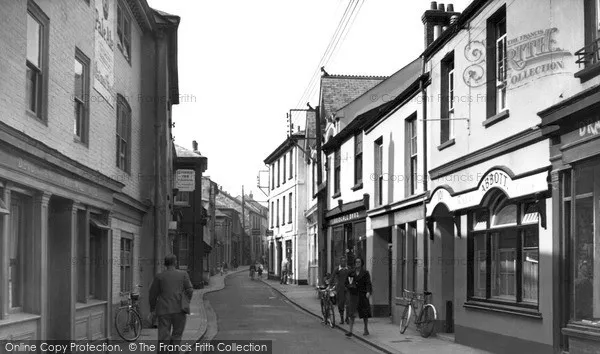 Photo: Millbrook, Tennessee, via photos.francisfrith.com
There was just one problem: the holiday didn't exist.
A Case of Mistaken Identity
What Mayor Whitfield had actually received was a routine administrative notice about "Founding Heritage Documentation" — a mundane request for towns to submit historical records to the state archives. A smudged carbon copy and unfortunate line breaks in the typewritten document had transformed bureaucratic paperwork into what appeared to be an official holiday declaration.
The confusion might have been cleared up quickly, but Millbrook's enthusiastic response created its own momentum. Local businesses began advertising "Founders' Heritage Day" sales, the high school marching band composed a special song, and neighboring towns started asking about joining the celebration. Within two years, the fake holiday had spread to three surrounding counties.
The Cover-Up That Became Policy
By 1940, Millbrook's "Founders' Heritage Day" was drawing visitors from across eastern Tennessee. Local newspapers covered the annual festivities, and the town had invested considerable money in permanent decorations and infrastructure to support the growing celebration. The holiday had become too big to simply disappear.
When federal administrators discovered the error in 1943 while processing wartime documentation, they faced an uncomfortable choice. Correcting the mistake would embarrass state officials who had unknowingly referenced the non-existent holiday in multiple documents over nearly a decade. More practically, it would devastate Millbrook's economy and potentially trigger lawsuits from businesses that had invested in the annual celebration.
The solution was elegantly bureaucratic: rather than admit the error, federal officials quietly added "Founders' Heritage Day" to the official registry of recognized local observances. A hastily drafted memorandum backdated the holiday's "official" recognition to 1934, creating a paper trail that made the fictional celebration retroactively real.
The Holiday That Refused to Die
For the next thirty years, Millbrook continued celebrating Founders' Heritage Day with no one in town knowing its absurd origins. The holiday developed its own traditions: the crowning of a "Heritage Queen," a pie-eating contest using recipes supposedly passed down from the town's founders, and an elaborate historical pageant depicting events that had never actually occurred.
The truth only emerged in 1974 when a graduate student researching Tennessee folk traditions stumbled across the original 1934 correspondence in state archives. His thesis advisor, intrigued by the discrepancy between the official holiday registry and actual historical records, began digging deeper into what became known as "The Millbrook Mystery."
Bureaucratic Archaeology
What researchers discovered was a perfect storm of administrative confusion. The original 1934 documentation request had been poorly formatted, creating ambiguous language that could be interpreted multiple ways. Mayor Whitfield's enthusiastic response had been filed with holiday proclamations rather than archive submissions, reinforcing the misunderstanding. Most remarkably, no one in the state government had questioned why they had no record of creating a holiday that appeared on their own official lists.
The federal decision to legitimize rather than correct the error reflected a broader pattern of bureaucratic risk aversion. Internal memos from 1943, declassified decades later, revealed officials' concerns about "maintaining public confidence in governmental competence" and avoiding "unnecessary disruption of established community practices."
Legacy of an Accident
Today, Millbrook still celebrates Founders' Heritage Day, though residents now know the holiday's peculiar history. The town has embraced the absurdity, marketing itself as "The Place Where Bureaucracy Created Tradition." The annual celebration now includes a "Paperwork Parade" featuring floats decorated as giant filing cabinets and typewriters.
The Millbrook case has become a favorite example among legal scholars studying how administrative errors can gain legitimacy through time and repetition. It demonstrates how institutional inertia, combined with community investment, can transform even the most accidental traditions into permanent cultural fixtures.
What started as a simple case of misread paperwork became a decades-long exercise in bureaucratic face-saving that ultimately created something more valuable than anyone intended: a genuine community tradition built on the most human of foundations — a honest mistake that everyone was too polite to correct.