The Surveying Blunder That Made One Wyoming Town Its Own Nation for Six Years

When Freedom Found You by Accident
Imagine waking up one morning to discover that your entire town no longer existed on any official government map. Not because it had been destroyed or abandoned, but because a surveyor's compass had been pointing slightly off-true for three months straight.
That's exactly what happened to the 127 residents of Liberty Creek, Wyoming, in 1902, when a railroad surveying crew's mathematical error accidentally erased their community from American sovereignty for six years.
 Photo: Liberty Creek, Wyoming, via www.winepros.org
The Mistake That Made History
The trouble began when the Denver & Rio Grande Railroad commissioned a boundary survey for their new western expansion. Chief surveyor Marcus Holloway had been tasked with mapping the precise borders between Wyoming Territory and the newly formed state of Colorado, but his compass had been damaged during river transport and was reading 2.3 degrees off magnetic north.
 Photo: Marcus Holloway, via images-wixmp-ed30a86b8c4ca887773594c2.wixmp.com
For three months, Holloway's team drew lines that placed Liberty Creek—a thriving mining settlement of 127 souls—in a legal twilight zone. According to their calculations, the town sat in a narrow strip of land that belonged to neither Wyoming nor Colorado, and wasn't covered by any existing federal territory designation.
The error went unnoticed until 1903, when Liberty Creek residents stopped receiving tax notices.
Life in Legal Limbo
At first, townspeople assumed it was a bureaucratic oversight. But when months passed without any government correspondence, local store owner Benjamin Marsh decided to investigate. His letters to both state capitals received the same response: Liberty Creek wasn't on their maps.
"We don't exist," Marsh wrote to his brother in Denver. "And apparently, we don't owe anyone anything either."
What followed was perhaps America's strangest experiment in accidental anarchism. Without official jurisdiction, federal taxes couldn't be collected. The county sheriff had no legal authority to make arrests within town limits. Marriage licenses became meaningless pieces of paper, and property deeds existed in a legal vacuum.
Rather than panic, Liberty Creek residents embraced their newfound freedom with characteristic frontier pragmatism.
The Republic of Necessity
By 1904, the town had established its own informal governance system. Marsh became the unofficial "mayor" through popular consensus, and residents created their own currency—wooden tokens backed by the promise of goods at local businesses.
They established the "Liberty Creek Arbitration Council" to settle disputes, since no official court system applied. Property transfers were recorded in a handmade ledger that residents treated as legally binding, despite having no governmental backing.
Most remarkably, crime virtually disappeared. Without official law enforcement, the community developed an elaborate system of social consequences that proved more effective than traditional justice. Public shaming and economic boycotts replaced fines and jail time.
"We governed ourselves better than any territory I'd seen," recalled resident Sarah McKinney decades later. "When everyone knows their neighbors and there's nowhere to hide, people behave themselves."
When Washington Came Knocking
The federal government finally noticed Liberty Creek's absence in 1908, when a postal inspector realized they'd been delivering mail to a town that didn't officially exist. The discovery triggered a bureaucratic earthquake that reached all the way to President Theodore Roosevelt's desk.
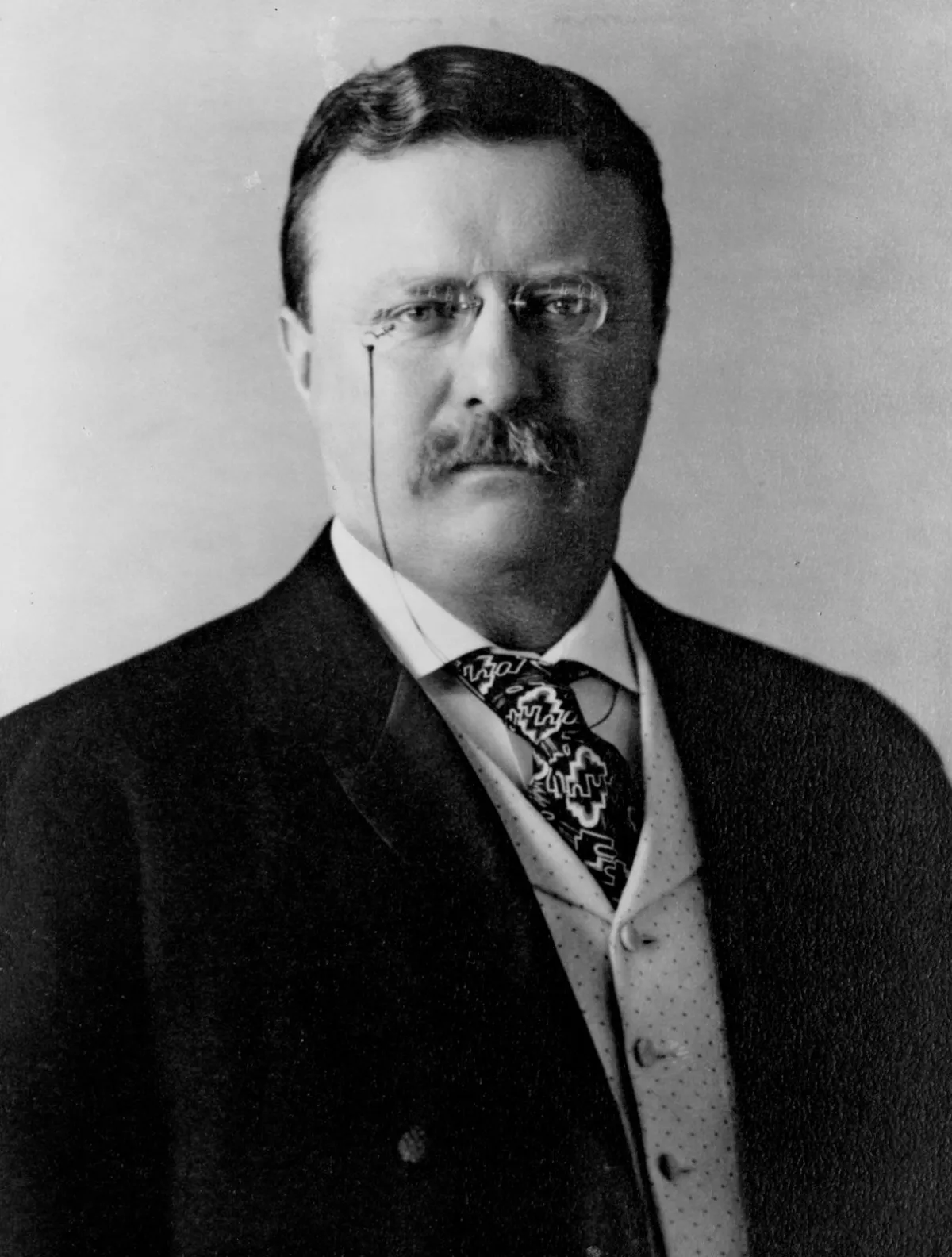 Photo: Theodore Roosevelt, via cdn.britannica.com
Attorney General Charles Bonaparte dispatched a team of lawyers to Wyoming with instructions to "make this problem disappear quietly." The legal challenge was unprecedented: How do you reclaim sovereignty over citizens who had been living in legitimate legal limbo through no fault of their own?
The solution required an emergency act of Congress and a presidential proclamation retroactively establishing Liberty Creek as part of Wyoming Territory "as if it had always been so." All marriages, property transfers, and business contracts from the six-year period were declared legally valid through federal decree.
The Price of Paperwork
The reintegration proved more traumatic than the original separation. Residents suddenly owed six years of back taxes, calculated with penalties and interest. Property that had been freely bought and sold using wooden tokens now required expensive legal documentation to establish clear title.
Many families, facing financial ruin from accumulated tax debt, simply packed up and left. By 1910, Liberty Creek's population had dwindled to just 31 residents.
The town limped along until 1923, when the last mine closed and the final residents departed. Today, only foundation stones mark where America's accidental republic once thrived.
The Legacy of a Surveyor's Error
Liberty Creek's bizarre chapter in American history became a cautionary tale about the importance of precise boundary surveys, leading to new federal standards for territorial mapping. But it also demonstrated something remarkable about human nature: given the chance, people could govern themselves effectively without the heavy hand of bureaucracy.
The wooden currency tokens occasionally surface at antique shops across Wyoming, each one a reminder of the time when a simple surveying mistake gave birth to America's smallest and most accidental nation.
MarMarcus Holloway, the surveyor whose broken compass started it all, never learned about Liberty Creek's six years of independence. He died in 1905, believing his maps had been perfectly accurate.