She Went Blind — Then She Learned to See With Sound
Bats do it. Dolphins do it. Certain species of whales and shrews do it. The ability to build a mental map of the surrounding environment using reflected sound — echolocation — has long been understood as a biological adaptation in animals that evolved specifically for that purpose.
Humans were not supposed to be on that list.
And yet, scattered across the world, there are people who navigate busy streets, ride bicycles, and identify objects at a distance using nothing but the echoes of clicks they make with their tongues. Some of them were born blind. Some lost their sight later in life. What they share is a skill that, until relatively recently, most neuroscientists considered essentially impossible for the human brain to develop.
The science that emerged from studying them is quietly one of the most remarkable discoveries in modern neurology.
The Click That Changes Everything
Human echolocation works on a surprisingly simple mechanical principle. A person produces a sharp, brief sound — typically a tongue click, though some practitioners use finger snaps or tapping — and then listens to how that sound bounces back from surfaces in the environment. The time delay, the pitch shift, and the texture of the returning echo all carry information about distance, size, and density.
In theory, the human auditory system is capable of detecting these differences. The question neuroscientists debated for years was whether the brain could actually use that information in any meaningful way — and more specifically, whether it could use it in a way that produced something resembling spatial vision.
The answer, it turns out, is yes. And the way the brain accomplishes it is what makes the story genuinely strange.
What the Scans Showed
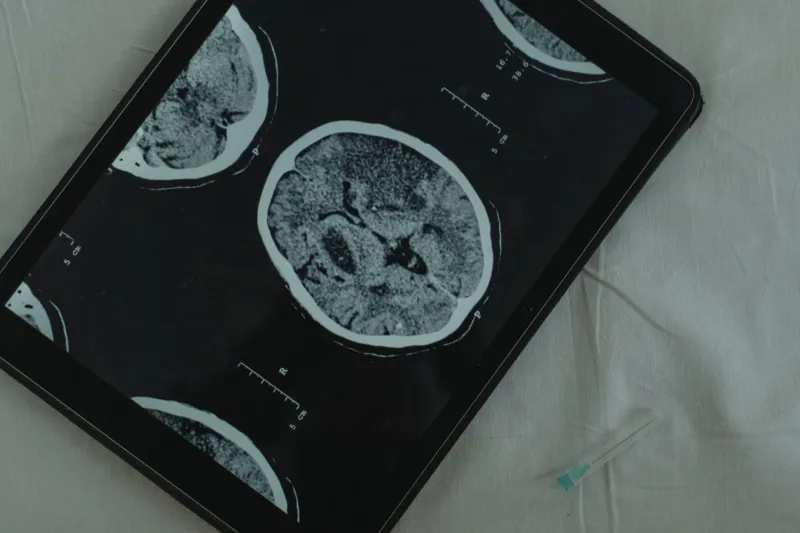
Researchers at the University of Western Ontario, led by neuroscientist Lore Thaler, conducted a series of landmark studies in the early 2010s using functional MRI to observe what happens inside the brains of expert echolocators while they process click echoes.
The results were startling. When skilled blind echolocators listened to recorded click echoes bouncing off objects, the brain regions that activated were not primarily the auditory processing areas — they were the visual cortex regions associated with spatial perception and object recognition.
In other words, the brain wasn't processing the echoes as sound. It was processing them as vision.
This is not a metaphor. The occipital cortex — the part of the brain that normally handles visual input from the eyes — was firing in response to acoustic information. In sighted control participants, those same regions showed no meaningful activation when exposed to the same sounds. The echolocators' brains had, through practice and neural adaptation, effectively reassigned visual processing real estate to handle a completely different sensory input.
The implications of that finding are still being absorbed by the neuroscience community.
The Brain Doesn't Accept Vacancy
What researchers observed in echolocators fits into a broader framework called neuroplasticity — the brain's documented ability to reorganize itself in response to changes in input or demand. The brain, it turns out, doesn't simply shut down regions that stop receiving their expected input. It repurposes them.
In people who lose their sight, particularly those who lost it early in life, the visual cortex doesn't go dark. It gets recruited. Studies have shown that in congenitally blind individuals, the visual cortex becomes active during tasks involving touch, language, and — as the echolocation research confirmed — sound. The brain treats unused processing capacity as available real estate and finds new tenants for it.
What makes expert echolocators particularly interesting is the degree of sophistication involved. This isn't a vague sense of proximity or a general awareness of open versus enclosed space. Experienced practitioners describe being able to distinguish the difference between a parked car and a garbage can, between a wooden surface and a metal one, between a doorway and a solid wall — all from echo information alone.
Daniel Kish, one of the most widely studied blind echolocators in the world, has been documented riding a mountain bike on trails using tongue clicks. He has taught the technique to hundreds of blind individuals through his organization, World Access for the Blind. He describes his perception of space as genuinely visual in character — not imagined, not inferred, but experienced as a kind of seeing.
Why This Matters Beyond the Remarkable
The scientific value of human echolocation research extends well beyond the individual stories of the people who practice it. It forces a reconsideration of some foundational assumptions about how the brain is organized.
The traditional model of brain function treated sensory regions as relatively fixed — the visual cortex processes vision, the auditory cortex processes sound, and those assignments are essentially permanent. The echolocation findings suggest that what the visual cortex actually does is process spatial information, and that it doesn't particularly care whether that information arrives through light or sound. The modality is incidental. The computation is what matters.
That insight has practical implications for how researchers think about rehabilitation after brain injury, sensory loss, and neurological conditions that affect specific brain regions. If the brain can reassign the visual cortex to process echolocation data, the question becomes: what else can it reassign, under what conditions, and how deliberately can that process be guided?
Those questions don't have complete answers yet. But the people clicking their tongues down busy sidewalks are helping researchers find them.
The Part That Stays With You
Here's the detail that tends to linger after you learn about this: the visual cortex, in expert echolocators, responds to silence the same way a sighted person's visual cortex responds to darkness.
When the clicks stop and the echoes go quiet, the spatial processing goes quiet with it. Turn off the sound, and the vision — such as it is — turns off too.
The brain built a second set of eyes out of sound. It just needed someone to figure out how to turn them on.