Nobody's Mayor: How a Nebraska Town Kept Re-Electing a Man Who Never Existed
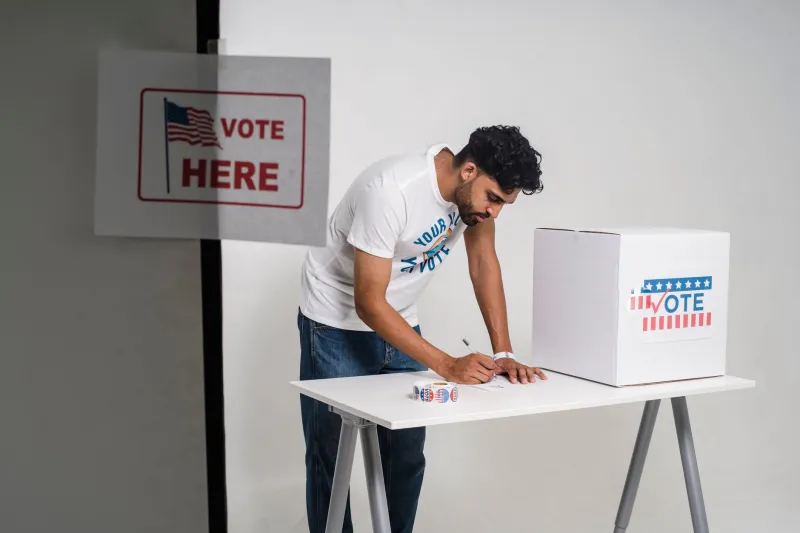
Nobody's Mayor: How a Nebraska Town Kept Re-Electing a Man Who Never Existed
Democracy runs on trust. Trust that the names on the ballot belong to real people. Trust that the votes get counted correctly. Trust that the person who wins actually shows up to govern. In the small Nebraska town of Millard Crossing in the mid-1930s, every single one of those assumptions quietly collapsed — and nobody noticed for the better part of a decade.
 Photo: Millard Crossing, via dynamic-media-cdn.tripadvisor.com
What unfolded there is one of the strangest case studies in American civic history: a fictional name, born from a bookkeeper's shorthand, that somehow won three consecutive local elections and held public office without ever once drawing a breath.
How a Ledger Entry Became a Candidate
The story starts, as so many strange ones do, with paperwork.
Millard Crossing, a farming community of roughly 600 people in eastern Nebraska, held its local elections the old-fashioned way. Ballots were hand-typed by a town clerk, printed at the local press, and distributed at the county seat. In the 1934 election cycle, the clerk responsible for compiling the candidate list was also doubling as the town's part-time bookkeeper — a not-uncommon arrangement in cash-strapped Depression-era municipalities.
Somewhere in the shuffle between ledger sheets and ballot drafts, a name from the bookkeeper's accounting shorthand made the leap onto the official ballot. The shorthand — believed to be a placeholder notation for an unverified account, something along the lines of "E.R. Voss" — appeared under the column for town alderman candidates alongside three legitimate contenders.
No one caught it before the ballots were printed. No one caught it before they were distributed. And on Election Day, enough voters — apparently assuming E.R. Voss was simply a neighbor they hadn't met — cast their ballots for him to push him into a narrow plurality.
E.R. Voss, man of mystery, had just won public office.
The Bureaucratic Circus That Followed
Here's where the story gets genuinely strange.
When Voss failed to appear for the swearing-in ceremony, the town clerk recorded the absence and moved on. Absentee officeholders weren't unheard of in that era — illness, farm emergencies, and travel delays were common enough that many small towns had informal workarounds. A placeholder vote was cast on Voss's behalf at the first few council sessions, attributed to "absent member," and the business of governing continued.
No one formally investigated. No one filed a complaint. The minutes of Millard Crossing's town council from late 1934 through 1935 reportedly reference E.R. Voss's absence on multiple occasions, always with the same bureaucratic shrug: member not present, vote recorded as abstention.
Then 1936 arrived, and Voss's name appeared on the ballot again.
Exactly how this happened remains unclear. The most plausible explanation, pieced together from county records decades later, is that the clerk simply copied the previous ballot's candidate list when preparing the new one — a shortcut that carried the phantom name forward without anyone stopping to verify he existed. Voss won again, this time by a slightly wider margin. Apparently, some voters remembered the name from the previous election and figured loyalty was as good a reason as any to vote for a man they'd never seen.
By the third election, in 1938, E.R. Voss had developed something of a local reputation — not as a person, but as a reliable abstention vote on the council. Some residents, frustrated with a particularly contentious road-paving dispute, reportedly told neighbors they were voting for Voss specifically because he never showed up to vote for anything.
When the Auditors Came Knocking
The fiction finally unraveled not through civic vigilance but through a routine state audit of Nebraska municipal records in 1939. An auditor reviewing Millard Crossing's council minutes flagged the repeated absences of one E.R. Voss and requested his contact information for a compliance questionnaire.
The town clerk, now a different person from the one who'd started the whole mess, had no contact information. There was no address on file. No tax records. No property listing. No birth certificate in the county register.
The investigation that followed was, by all accounts, more embarrassing than dramatic. State officials confirmed what the paperwork eventually made obvious: E.R. Voss did not exist. Three elections had been won, and three terms of office had been nominally held, by a name that originated in a bookkeeper's ledger.
The legal resolution was almost comically anticlimactic. Nebraska statutes at the time had no specific provision for vacating the office of a non-existent person, so the town council simply passed a local resolution declaring the seat vacant due to "inability to locate the elected member" and held a special appointment vote to fill the position.
Why It Still Matters
It would be easy to write off the E.R. Voss affair as a Depression-era quirk — a product of overworked clerks, under-resourced local government, and voters who didn't know their neighbors well enough to question an unfamiliar name. And that's all true.
But the story carries a quieter lesson that lands harder the longer you sit with it.
Democratic systems are procedurally rigid by design. They're built to process names, count marks, and declare winners — not to verify that the people involved are real. The machinery worked exactly as intended in Millard Crossing. Ballots were printed, votes were tallied, a winner was announced. The system didn't fail. It just never thought to ask whether the candidate was a human being.
In a town of 600 people, across three election cycles, spanning nearly five years, not a single procedural checkpoint caught it.
Somewhere in a Nebraska archive, the meeting minutes of Millard Crossing's town council still record the votes of E.R. Voss — every single one of them listed as absent.