Checkmate, Comrade: The Cold War Spy Ring That Ran Entirely on Chess Moves and Postage Stamps
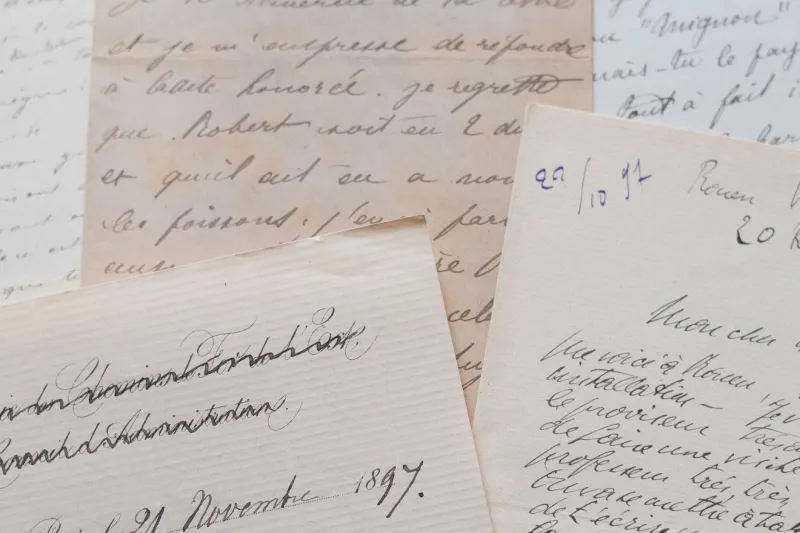
The Cold War produced some genuinely creative espionage. Hollow coins with microfilm inside. Dead drops behind loose bricks in European train stations. Radio signals broadcast in number sequences at three in the morning. But somewhere near the top of the list of strangest intelligence operations in American history sits a scheme so low-tech, so patient, and so improbable that it took the FBI years to untangle — and at the center of it was a man in Ohio who thought he was just playing chess.
He was not just playing chess.
The Genteel World of Correspondence Chess
Before the internet, before computers could simulate grandmaster-level play, serious chess enthusiasts had a way of competing across long distances: they mailed each other moves. Correspondence chess — sometimes called postal chess — was a legitimate, organized sport with clubs, rankings, and international tournaments. Players would record their move on a postcard or letter, drop it in the mail, and wait days or weeks for their opponent to respond.
It was slow, methodical, and required a particular kind of patience. It was also, as Cold War intelligence officers apparently recognized, a nearly perfect cover for covert communication.
The mechanics are elegant once you understand them. A chess move is a short, standardized notation — something like "e4" or "Nf3" — that means nothing to anyone who isn't following the game. Embedded within a sequence of legitimate moves, additional coded information could be layered in ways that looked, to any casual observer, like nothing more than two people arguing about the Sicilian Defense.
The Grandmaster Who Didn't Know
The Ohio grandmaster at the center of this story — whose name has been handled carefully in historical accounts, given that he was ultimately cleared of any wrongdoing — was a well-regarded player in American correspondence chess circles in the late 1950s and early 1960s. He was the kind of dedicated amateur who kept meticulous records of his games, corresponded with players across the country and internationally, and took his chess seriously enough to study openings and endgames with real rigor.
At some point, he began exchanging letters with a new correspondent — ostensibly a fellow enthusiast from Eastern Europe. The letters were friendly, chess-focused, and entirely normal in tone. The games they played were real games, conducted properly, with genuine strategic content. The grandmaster found his new pen pal to be a strong player and a pleasant correspondent.
What he didn't know was that his pen pal was a Soviet intelligence handler, and that the letters flowing back and forth across the Atlantic were carrying considerably more information than chess notation.
The handler had, apparently, recruited or developed a contact somewhere in the American Midwest who was passing along low-level intelligence — nothing weapons-grade, but useful background material about industrial activity, personnel movements, and local infrastructure in the region. The chess correspondence provided the perfect vehicle: regular, innocent-looking mail between two private citizens with a documented shared hobby.
The grandmaster was, in intelligence terminology, an unwitting cutout. He was a real person conducting a real activity that provided perfect cover for communication he knew nothing about.
The Misaddressed Envelope That Broke the Operation
For roughly four years, the operation ran without a hitch. Then, sometime in the early 1960s, someone made a small and catastrophic error: a letter intended for the handler's actual contact was misaddressed and ended up being flagged during routine mail surveillance.
The FBI, which had been monitoring international correspondence with Soviet-connected addresses as a matter of standard Cold War practice, pulled the letter. What they found inside didn't look like chess notation — it looked like the kind of encoded operational communication that intelligence agencies recognize immediately.
The investigation that followed worked backward through the correspondence chain. Agents identified the Ohio grandmaster's letters as part of the same network, pulled his mail records, and interviewed him at length.
The interviews, by all accounts, were almost comically one-sided. The grandmaster was baffled. He had no knowledge of any intelligence operation. He had no contact with Soviet handlers. He had been playing chess. He could produce every letter, every game record, every notation card going back years. His confusion was not the performance of a skilled operative — it was the genuine bewilderment of a man who had just been told that his favorite hobby had been weaponized without his knowledge.
He was never charged. The FBI's own assessment concluded that he had been used without awareness, a civilian whose legitimate correspondence had been parasitized by a sophisticated operation running alongside it.
The Sicilian Defense, Literally and Figuratively
There's a certain irony in the fact that the Sicilian Defense — the chess opening named for its origins in 16th-century Sicily, famous for its complexity and its tendency to produce sharp, unpredictable games — was reportedly the grandmaster's preferred opening system. It's also, historically, associated with a kind of controlled chaos: a response to an opponent's opening move that accepts temporary disadvantage in exchange for long-term counterplay.
The Soviets, in a sense, played a Sicilian of their own. They accepted the exposure of using a real, traceable civilian as part of their operation in exchange for the near-perfect cover it provided. For four years, it worked beautifully. Then one misaddressed envelope undid everything.
What the Story Says About the Cold War
American popular memory of Cold War espionage tends toward the dramatic — defectors, double agents, nuclear secrets passed on microfilm in parking garages. But a significant portion of actual Cold War intelligence work was mundane, patient, and built on exploiting the ordinary routines of ordinary people.
The Ohio grandmaster's story is a reminder that you didn't have to be a spy to end up in the middle of one. You just had to be consistent, predictable, and trusting — the kind of person who mailed chess moves to strangers because he loved the game and assumed everyone else did too.
The operation was eventually dismantled. The handler was never publicly identified. The grandmaster went back to playing chess.
Somewhere in an FBI archive, there is almost certainly a file containing four years of chess correspondence, annotated by agents trying to determine which moves were real and which were cover. That's the kind of document that belongs in a museum — right next to the postage stamps that made the whole thing possible.