One Wrong Digit, Ten Times the People: The Colorado Town That Got Rich Off a Census Typo

Photo: Courtney G. Coffman, CC BY-SA 4.0, via Wikimedia Commons
Imagine waking up one morning to find that, according to the United States federal government, your town has ten times as many people as it actually does. Your roads are suddenly eligible for major infrastructure grants. Your school district qualifies for funding it was never supposed to receive. Disaster relief allocations, highway improvement budgets, rural development programs — all of them recalculated around a population that exists only on paper.
For the residents of Harlan Creek, a small former mining community tucked into the mountains of western Colorado, this wasn't a hypothetical. It was just a Tuesday in 1963 — and the consequences took nearly twenty years to fully unravel.
 Photo: Harlan Creek, via cms.organictransition.org
The Number That Started Everything
The 1960 U.S. Census was a massive logistical undertaking, processed through a combination of field enumeration and centralized data entry at a time when the transition from paper records to early computing systems introduced its own particular species of error.
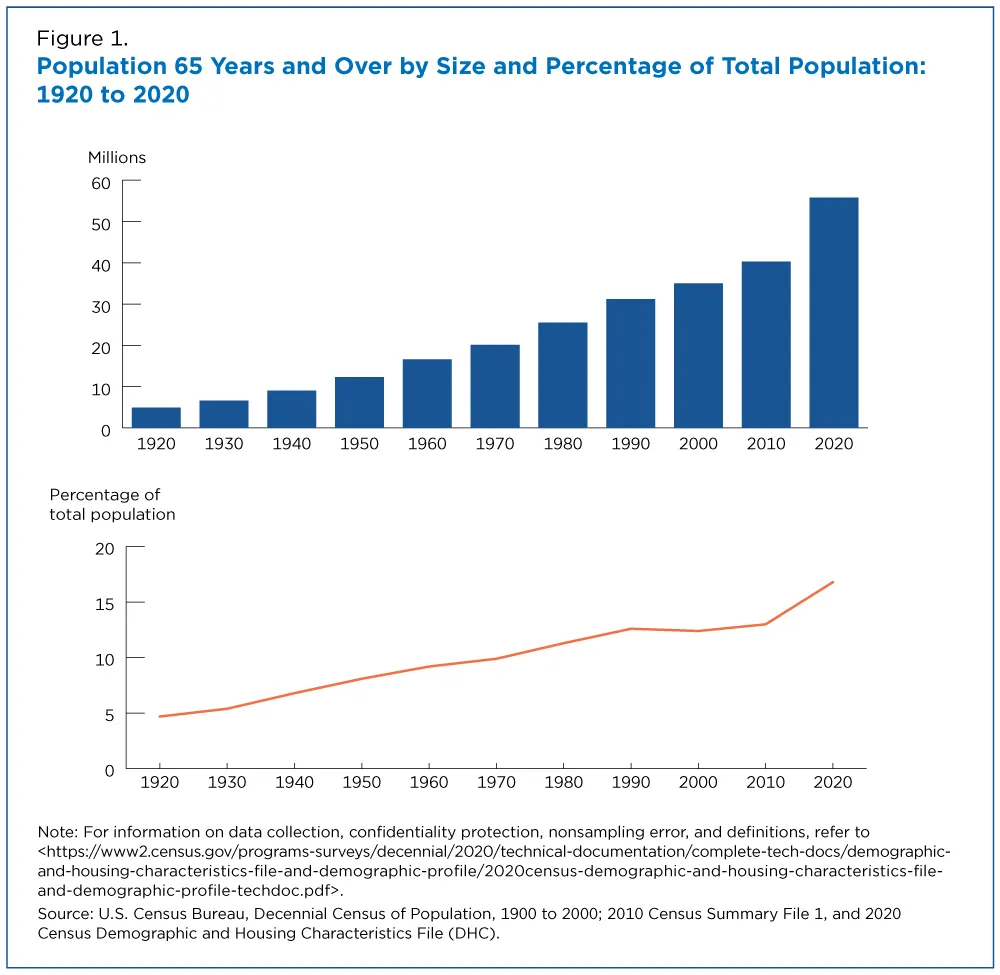 Photo: U.S. Census, via www.census.gov
Harlan Creek, with a population of somewhere between 380 and 420 depending on the season, was recorded by a field enumerator and then transcribed by a data entry clerk at a regional processing office. The clerk, working through a substantial backlog of mountain community records, transposed two digits in the population figure. Instead of entering 412, the number entered into the federal record was 4,120.
A single keystroke. A difference of 3,708 people.
The error passed through the standard verification process without being flagged. Population figures for small rural communities weren't cross-checked against prior census data with the same scrutiny applied to major urban centers, and Harlan Creek's number — while a dramatic increase — wasn't so astronomically implausible for a region that had seen postwar population shifts. The figure was published in the official 1960 Census results and distributed to every federal agency that used population data to allocate resources.
Harlan Creek, population 4,120, was open for business.
The Windfall Nobody Questioned
Federal funding tied to population figures doesn't arrive all at once in a single dramatic check. It flows in gradually, through dozens of separate programs administered by different agencies, each operating from the same underlying data. For Harlan Creek, the money started appearing within a year of the census publication.
The most significant early allocation was a Federal Aid Highway grant to improve and expand the county road connecting Harlan Creek to the nearest state highway. The existing road — a single-lane gravel track adequate for a community of 400 — was deemed dangerously undersized for a town of over 4,000. The grant funded a full resurfacing, lane widening, and the installation of guardrails along a particularly treacherous two-mile stretch above the valley floor.
The road, by all accounts, was excellent. The people of Harlan Creek used it enthusiastically.
School funding followed. The local district received per-pupil allocations calculated against the census-recorded population, resulting in resources that would have been unimaginable under the real numbers. A new classroom wing was built onto the elementary school. Teacher salaries improved. The district purchased equipment it had been requesting for years without result.
Over the following decade and a half, Harlan Creek received rural development grants, small business administration resources, agricultural extension funding, and — after a particularly brutal winter in 1969 — a federal disaster relief allocation calibrated for a community roughly ten times its actual size. Local officials, to their credit, apparently used the disaster funds to repair genuine storm damage and didn't pocket the surplus. They simply had more money than the damage required and spent it on long-deferred infrastructure improvements.
Throughout all of this, nobody in Harlan Creek formally reported the error.
This is the part of the story that requires a moment of honest consideration. Did local officials know? The evidence is genuinely ambiguous. The most charitable interpretation — and possibly the accurate one — is that small-town administrators simply trusted federal data over their own headcounts, assuming the census reflected some official reality they weren't fully aware of. A less charitable reading suggests that at least some people noticed the discrepancy and found the funding too useful to question.
The truth is probably somewhere in the middle, as it usually is.
The Audit That Changed Everything
In 1982, a routine federal audit of rural Colorado funding allocations triggered a cross-reference check between census population figures and independent state records — birth registrations, school enrollment data, utility connection counts, and voter rolls.
Harlan Creek's numbers didn't match. At all.
The state had independent documentation placing the community's actual population at approximately 390 people. The federal record said 4,120. Auditors initially assumed the state data was incomplete. Then they pulled the school enrollment figures. Then the utility records. Then the voter registration rolls.
Every independent source told the same story. Harlan Creek had roughly 400 residents. It had always had roughly 400 residents.
The investigation traced the discrepancy back to the 1960 data entry error within a matter of weeks. The transposed digits were identified, documented, and formally reported. The question that followed — and the one that consumed local and federal officials for the better part of three years — was what, if anything, happened next.
The Legal Tangle Over Money That Was Already Spent
Federal recovery of misallocated funds is, to put it gently, a complicated process even when the misallocation involves clear fraud. When the cause is a clerical error and the recipients spent the money on legitimate public infrastructure, it becomes genuinely thorny.
Harlan Creek's town attorney argued — persuasively, it turned out — that the community had relied in good faith on official federal data and had used the resulting funds for legitimate public purposes. No individual had been personally enriched. No fraud had been committed. The road was real. The school wing was real. The disaster repairs were real.
After extended negotiations, federal agencies recovered a partial repayment covering a small portion of the total misallocation, primarily from programs where the funding had been used for purposes with ongoing federal oversight. The infrastructure projects — the road, the school construction, the utility improvements — were effectively written off as good-faith expenditures.
Harlan Creek kept its road.
What One Wrong Number Actually Costs
The Harlan Creek case is a strange and faintly comic story, but it carries a question worth sitting with seriously.
The census is the foundation on which an enormous share of American public spending is calculated. Hundreds of billions of dollars in federal allocations flow from a single count conducted once every ten years by human beings working under pressure, using whatever technology is available, processing millions of individual data points under tight deadlines.
One transposed digit in one mountain community generated nearly two decades of misallocated resources before anyone caught it.
If it happened in Harlan Creek in 1963, it almost certainly happened elsewhere. The real question isn't whether the system failed — it's how many times it failed without anyone ever noticing, because the numbers were never quite wrong enough to trigger an audit.
Somewhere right now, a town is either getting too much or too little, because someone's fingers were in a hurry.