The Mountain That Broke the Laws of Trains: Pennsylvania's Impossible Railway That Somehow Ran for Decades
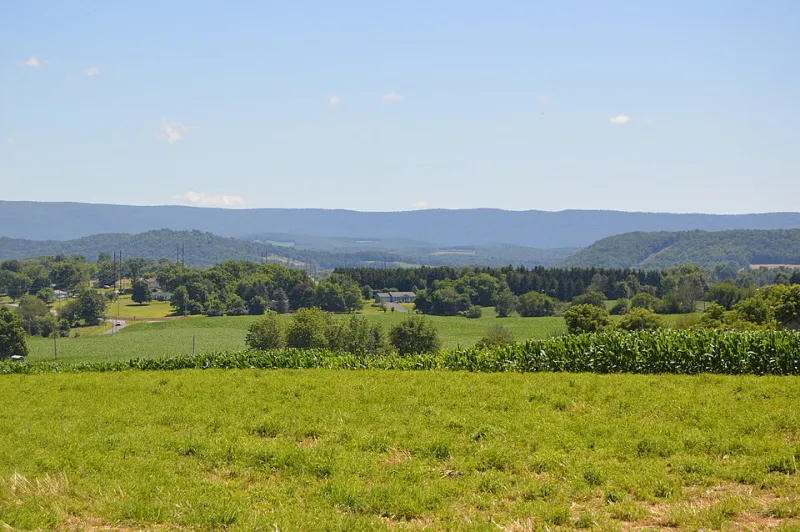
Photo: Nyttend, Public domain, via Wikimedia Commons
There's a certain kind of engineering failure that's so spectacular it almost becomes an achievement. Building a bridge that falls down is a disaster. Building a railroad that runs uphill in both directions and then operating it profitably for decades? That's something else entirely.
And yet, that's exactly what happened in the mountains of Pennsylvania in the nineteenth century — a story so strange that transportation historians still cite it as one of the most creative responses to a catastrophic miscalculation in American railroad history.
Coal, Mountains, and Overconfidence
By the 1820s, the anthracite coal fields of eastern Pennsylvania were producing enormous wealth — but only if you could actually get the coal out. The mountains between the mining towns and the markets along the coast were steep, rugged, and completely indifferent to the ambitions of industrialists.
The solution, engineers decided, was a railroad. Specifically, the Mauch Chunk & Summit Hill Railroad, which began operation in 1827 and is generally recognized as one of the earliest operational railroads in the United States. The original design was beautifully simple: gravity would do the work. Loaded coal cars would roll downhill from the summit mines to the town of Mauch Chunk below. Empty cars would be hauled back up by mules. Gravity in, mule power out. Clean, efficient, profitable.
For a while, it worked exactly as planned. Then someone had a bigger idea.
The Expansion That Broke Everything
As demand for coal grew, the railroad's operators decided to expand the line, extending it to create a complete loop that would eliminate the mule-hauling problem entirely. The new section would allow loaded cars to continue in a circuit, using the natural terrain to maintain momentum throughout the journey.
It was a reasonable plan on paper. On the actual Pennsylvania landscape, it was a catastrophe.
When surveyors laid out the expanded route, they made a calculation error that, in retrospect, seems almost impossible to miss: the new section of track was graded in a way that created a route that climbed in elevation at both ends of the journey. In plain terms — the train went uphill leaving town, and uphill coming back. There was no net downhill run to exploit. Gravity, the entire engine of the original system, had been designed out of the design.
By the time anyone realized what had happened, the track was already laid.
The Solutions Were Spectacular
Facing the choice between tearing up miles of freshly installed track and figuring out something creative, the railroad's operators chose creativity. What followed was a series of increasingly ingenious workarounds that transformed the Mauch Chunk line into one of the most mechanically peculiar railroads in American history.
The first solution was a series of stationary steam engines positioned at key points along the route. These engines powered rope-and-pulley systems that physically hauled cars up the steeper inclines, essentially dragging the train uphill by brute force. It was expensive, loud, and required constant maintenance — but it worked.
The second solution was more elegant: engineers redesigned portions of the track to use a series of switchbacks, zigzagging up steep grades in a way that reduced the effective incline at any single point. Cars would ascend one leg of the switchback, stop, reverse direction, and climb the next leg. It added time and complexity to every journey, but it spread the mechanical load across the entire system.
The third solution was the most unexpected: they started charging tourists to ride it.
The Accident That Became an Attraction
By the mid-nineteenth century, word had spread that the Mauch Chunk railroad offered something no other train ride in America could match — a genuinely wild, switchback-heavy journey through mountain scenery that felt more like a roller coaster than a freight line. Day-trippers began arriving from Philadelphia and New York. Hotels opened nearby. The railroad that had been built wrong became, almost accidentally, one of the most popular tourist destinations in the eastern United States.
At its peak, the Mauch Chunk Switchback Railway — as it had been rebranded — was drawing over 35,000 visitors per year. Riders described the experience as terrifying and exhilarating in equal measure. The very qualities that made it a logistical nightmare for coal transport made it a thrill for passengers.
Historians of American amusement parks have pointed to the Switchback Railway as a direct ancestor of the modern roller coaster. When LaMarcus Thompson built the first purpose-built American roller coaster at Coney Island in 1884, he explicitly cited the Mauch Chunk line as his inspiration. The railroad that couldn't figure out which way was downhill inadvertently invented an entire entertainment industry.
The End of the Line
The Switchback Railway ran in various forms until 1937, when it was finally dismantled. By then, the automobile had made it obsolete as both a freight line and a tourist attraction. The coal industry had moved on. The mountains remained.
The original engineering error — that fundamental, inexplicable failure to account for basic topography — was never fully explained. The surveyors involved left no records of how the mistake was made. Whether it was a miscalculation, a misread map, or simple overconfidence in the face of difficult terrain, nobody knows for certain.
What's certain is that the people who inherited the mistake didn't give up. They looked at a railroad that ran the wrong direction and figured out how to make it run anyway — and in doing so, accidentally gave America its first roller coaster.
Sometimes the best engineering solutions come from the worst engineering mistakes.