He Just Needed to Fix a Pipe. He Ended Up Rewriting 2,000 Years of American History.
Most plumbing stories end the same way: the pipe gets fixed, the bill arrives, and life moves on. This one ended with a Smithsonian recognition, a rewritten chapter of American history, and a very frustrated homeowner who spent years trying to convince experts that what he'd found in his own backyard was real.
It started, as so many strange true stories do, with something breaking at the worst possible time.
The Pipe That Changed Everything
In rural Louisiana, a homeowner — we'll call him the accidental archaeologist, because that's exactly what he became — noticed the signs of a serious plumbing problem beneath his property. A repair crew was called in to dig. Standard stuff. Except when the crew started excavating near the foundation, they hit something that wasn't dirt and wasn't pipe.
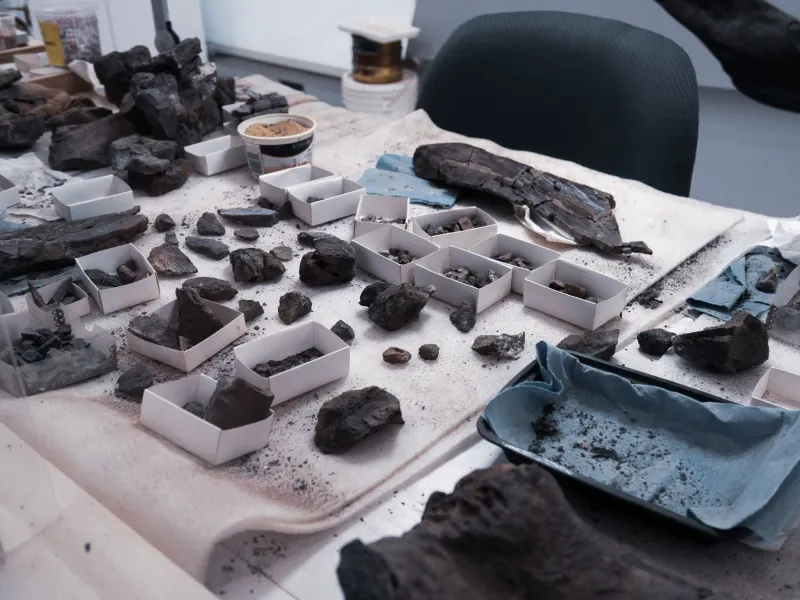
What they found was a layer of densely packed artifacts: pottery shards, carved bone fragments, traces of what appeared to be structured earthworks, and evidence of organized, deliberate construction beneath the soil. The homeowner, who had no archaeological training whatsoever, had enough sense to stop the digging and start asking questions.
The questions, it turned out, were the easy part.
Nobody Wanted to Listen
The first phone calls went nowhere. Local universities were politely skeptical. State archaeological offices sent form letters. A few experts agreed to look at photographs and responded with the academic equivalent of a shrug — interesting, perhaps, but probably not what the homeowner thought it was. The artifacts could be from any number of periods. The earthworks could have a dozen explanations. Without a formal excavation by credentialed professionals, there wasn't much to say.
The problem was getting credentialed professionals to show up.
There's a persistent and uncomfortable pattern in American archaeology where significant discoveries made by non-academics get treated as background noise until someone with the right letters after their name decides to take it seriously. The homeowner ran into this wall repeatedly. He documented everything he could. He preserved the site as best he understood how. He wrote letters, made calls, and showed up at academic conferences uninvited.
For years, he was the amateur who wouldn't let it go.
What Was Actually Down There
When a team of professional archaeologists finally agreed to conduct a proper survey of the site, what they found was extraordinary.
The artifacts and structural evidence pointed to a complex, organized Indigenous settlement that predated previous estimates of sophisticated civilization in the region by nearly two millennia. The site showed evidence of planned construction, trade networks, and social organization at a scale and at a time period that didn't fit the existing academic model for the area.
Pre-Columbian history in North America has long been undersold in popular understanding — the idea that the continent was sparsely populated by simple hunter-gatherer societies before European contact is a myth that archaeology has been slowly dismantling for decades. But this Louisiana site was a particularly dramatic piece of that puzzle. It pushed the timeline of complex Indigenous civilization in the region back in ways that forced a genuine reassessment of what was happening in the American South thousands of years ago.
The Smithsonian Institution eventually became involved in the recognition and study of the site. The homeowner, the man who'd spent years being dismissed as an enthusiastic amateur, was acknowledged as the person who'd made the initial discovery possible — the one who'd stopped the plumbers, preserved the evidence, and refused to accept that nobody was interested.
 Photo: Smithsonian Institution, via cdn.britannica.com
What It Means When History Is Hiding Underground
One of the more unsettling implications of this story is how much we don't know simply because we haven't looked — or haven't looked in the right places, or haven't listened to the right people.
Louisiana's soil is rich and layered, shaped by the Mississippi River over thousands of years. Archaeological sites can be buried deep, obscured by flooding, erosion, and centuries of human activity on top of them. The fact that this particular site was only discovered because a pipe burst is less a fluke than a reminder: there is no reason to believe it's the only one.
The academic dismissal of amateur discoveries is a problem the archaeological community has wrestled with openly in recent years. Some of the most significant finds in American history — and in world history — have come from people with no formal training who simply noticed something strange and had the stubbornness to keep pointing at it until someone listened.
In this case, the stubbornness paid off in a significant way. What was initially treated as the overexcited claim of a homeowner with too much time on his hands became a peer-reviewed, Smithsonian-recognized reshaping of the regional historical record.
The Plumber Never Got Famous
Somewhere in Louisiana, there is a plumber who went out to fix a pipe and accidentally set off a chain of events that changed how historians understand thousands of years of American history. He almost certainly has no idea.
The homeowner knows, though. He knows it every time someone cites the site in an academic paper, every time a student learns about it in a history class, every time the timeline of Indigenous civilization in North America gets pushed a little further back toward the truth.
History doesn't always get rewritten in archives and lecture halls. Sometimes it gets rewritten in a muddy excavation ditch in rural Louisiana, by a man who just needed to fix his pipes and ended up finding something that had been waiting two thousand years to be found.