The Oldest Photo in America Has Four Owners and Zero Owners at the Same Time
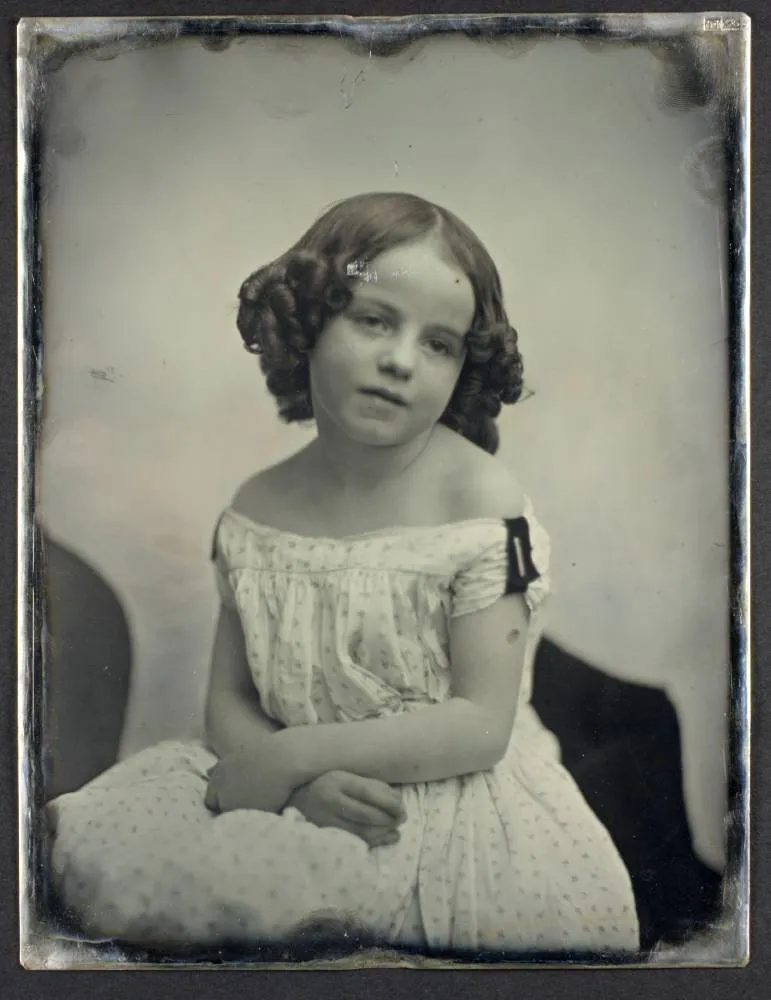
Photo: George Eastman House, No restrictions, via Wikimedia Commons
Legal systems are designed for the living. They assume that ownership can be traced, that records exist, that someone somewhere has a piece of paper proving what belongs to whom. They work reasonably well for houses, cars, and savings accounts. They work considerably less well for a photograph taken before the Civil War by a man who died without heirs, held by an institution that merged with another institution that merged with a third, and now claimed simultaneously by four different organizations — none of whom can prove their claim is the only valid one.
 Photo: Civil War, via c8.alamy.com
This is the strange legal afterlife of one of the earliest surviving photographs taken on American soil, an image that should be a celebrated piece of cultural history and instead sits at the center of an intellectual property dispute that experts have compared, without irony, to a knot that tightens the harder you pull on it.
The Image Itself
The photograph — a daguerreotype, the dominant image format of its era — was taken sometime in the late 1830s or very early 1840s, almost certainly in the northeastern United States. The precise date is disputed, which is itself part of the problem. Daguerreotypes from this period weren't stamped with metadata. You couldn't check the file properties. Historians date them through contextual clues: the clothing in the image, the architectural details visible in the background, records from the photographer's known period of activity.
The photographer was a working professional in a major American city, one of dozens of early practitioners experimenting with the new French technology that Louis Daguerre had introduced to the world in 1839. He was not famous. He ran a small studio, produced portraits for paying customers, and left behind a modest body of work — most of which has been lost to time, fire, and simple neglect.
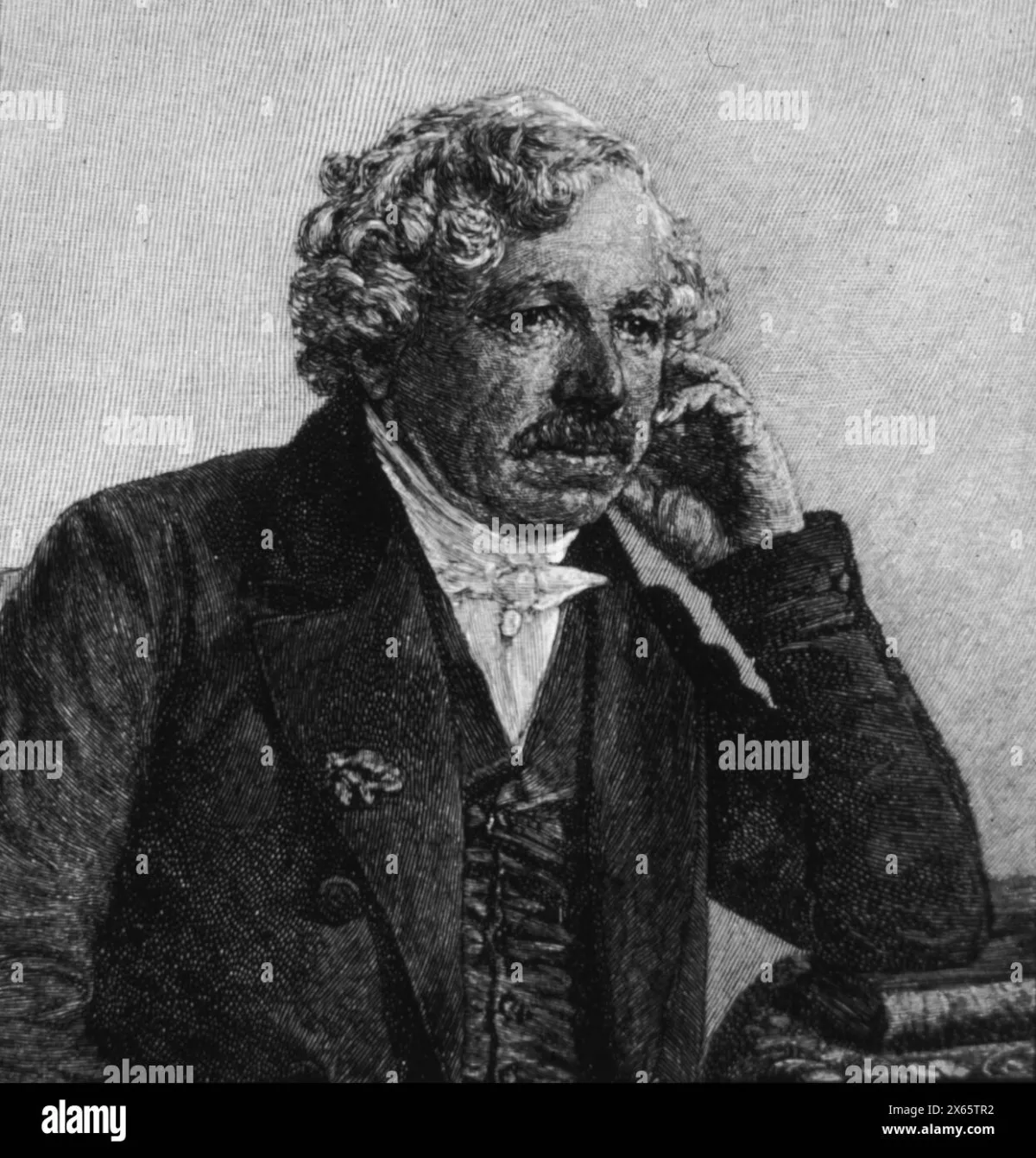 Photo: Louis Daguerre, via c8.alamy.com
The image in question survived because it passed into institutional hands relatively early. Within a few decades of being made, it had been acquired by a regional historical society as part of a broader collection of early photographic material. That should have been the end of the ownership story. It was not.
The Merger Problem
Over the course of the 20th century, the historical society that originally held the photograph went through a series of mergers, dissolutions, and reorganizations that are, by any measure, a records-keeping nightmare. At various points, the collection was transferred, loaned, donated, and absorbed into the holdings of other institutions — sometimes with clear documentation, sometimes with paperwork that was incomplete, contradictory, or simply missing.
By the time intellectual property lawyers began examining the situation seriously in the 1990s — prompted by the growing commercial value of historical images in the digital age — they found that four separate institutions could each produce documentation suggesting they had a legitimate claim to the photograph. A university archive had a deed of gift from 1962. A state historical commission had transfer records from 1978. A private foundation had a bequest document from the 1940s. And a fourth institution, a regional museum, had physical possession of the image and argued that continuous custody constituted a form of de facto ownership.
Each claim had gaps. Each could be challenged. None was airtight.
The Copyright Layer
Layered on top of the ownership dispute is a copyright question that is, if anything, even more convoluted. Under modern U.S. copyright law, works created before 1924 are generally in the public domain — meaning anyone can use them freely. That should resolve things neatly. Except that copyright law as applied to institutional holdings isn't always that clean.
Some legal scholars argue that while the underlying image may be in the public domain, a high-quality reproduction scan of that image — the kind institutions create and license — can itself carry a separate copyright as a creative work. Others argue, equally forcefully, that a faithful reproduction of a public domain work doesn't generate new copyright; it's just a copy. Courts have gone both ways on this question depending on jurisdiction and circumstance.
What this means in practice is that even if the image itself is freely usable, the specific digital reproductions held by each of the four institutions may or may not be subject to licensing claims. Publishers, documentary filmmakers, and digital archives trying to use the photograph have navigated this by doing one of two things: paying licensing fees to whichever institution responds to their inquiry first, or simply avoiding the image entirely.
What Happens Now
Intellectual property attorneys who have reviewed the case describe it as a genuine anomaly — not because any individual element is unprecedented, but because so many complicating factors exist in the same case simultaneously. The original creator is long dead with no heirs. The chain of institutional custody is broken in multiple places. The copyright status of reproductions is unsettled law. And none of the four claimant institutions has shown sufficient motivation to pursue expensive litigation that might resolve the question definitively — because the cost of the lawsuit would almost certainly exceed any realistic financial benefit.
So the photograph exists in a kind of permanent legal suspension. It sits in a museum's climate-controlled storage, physically present and historically significant, while the question of who owns it — if anyone does — drifts unresolved through the decades.
Some legal historians have suggested that the cleanest solution would be for all four institutions to jointly donate the image to a public trust, clearing the ownership question in a single stroke. As of the most recent reporting on the case, no such agreement has been reached.
The Bigger Picture
What makes this story genuinely strange isn't the legal complexity — intellectual property disputes are common enough. It's the specific absurdity of applying those legal frameworks to an image older than the laws themselves. Copyright law wasn't built with 180-year-old orphaned photographs in mind. It was built for living creators protecting recent work.
When the system meets history, it sometimes produces clarity. And sometimes it produces a photograph that belongs to everyone and no one, sitting in a drawer, waiting for a resolution that the legal system may simply not be equipped to provide.